
Medical Travel from Saudi Arabia to Korea for Cosmetic Surgery: Visa, Costs and Clinical Coordination - A Complete Guide

Direct and one-stop routings from the Kingdom to Seoul have expanded in recent years. Photo: Ibrahim Abdullah / Unsplash
Quick answer Saudi passport holders are not on Korea's visa-free list, so a visa must be obtained in advance through the Korean diplomatic mission in the Kingdom before travelling for treatment. For cosmetic surgery the relevant categories are usually the short-term medical visa or a general short-term visit visa, and a clinic's appointment confirmation and treatment plan are normally part of the application. Allow four to six weeks for the paperwork, and plan a stay of seven to fourteen days depending on the procedure.
In this guide
Patients travelling from Saudi Arabia to Korea face a different set of practical problems from those travelling from within Asia. The flight is long, the visa is not automatic, prayer and dietary needs have to be built into a surgical schedule rather than added afterwards, and the clinics best set up for Arabic-speaking patients are not always the ones that appear first in search results. None of these are obstacles so much as planning items, and the patients who have the smoothest experience are the ones who settle them before booking a flight. This guide covers entry requirements, routing, interpretation, religious and dietary arrangements, payment, agency verification and aftercare once you are back in the Gulf. Entry rules change, so treat this as orientation and verify current requirements directly.
Entry requirements and which visa applies
Saudi Arabia is not among the countries whose nationals may enter Korea without a visa, so an application in advance is required and the electronic travel authorisation used by visa-waiver nationals does not apply. For treatment, applicants are generally directed either to the short-term medical category intended for patients and their accompanying companions, or to a general short-term visit visa, with the choice depending on the length of stay, the nature of the treatment and whether a registered medical institution is issuing the supporting documents.
Supporting paperwork normally includes a confirmation of appointment, a treatment plan with expected duration, proof of funds and accommodation, and documentation for anyone travelling as a companion. Our guide to the Korea medical visa (C-3-3 and G-1-10) sets out the categories in detail. Build four to six weeks into your timeline for this stage, and do not book a non-refundable flight before the visa is issued.
Flights and routing from the Kingdom
Riyadh and Jeddah both connect to Seoul Incheon, and the practical choice is between a direct service where available and a one-stop routing through a Gulf hub, Istanbul, or a Southeast Asian hub. Total journey time commonly falls between roughly eleven hours direct and sixteen to twenty hours with a connection, and the time difference is around six hours ahead of Riyadh. For a patient the relevant question is not the cheapest fare but the return leg: flying home within the first few days after facial or body surgery is uncomfortable and sometimes medically inadvisable, so the return should be booked with flexibility or deliberately late. Our guide to flying after cosmetic surgery sets out typical safe windows by procedure type.
Planning item | What to expect | When to arrange it |
Visa application | Required in advance; not visa-free | 4-6 weeks before travel |
Clinic appointment confirmation | Needed for the visa file | Before applying for the visa |
Flight time | About 11 hours direct, 16-20 with a stop | After the visa is issued |
Arabic interpretation | Limited; confirm in-house or contracted | At first contact with the clinic |
Length of stay | Around 7-14 days by procedure | Before booking the return leg |
Payment method | Deposit plus balance, card limits a common issue | 2 weeks before surgery |
Aftercare plan | Suture removal and first review, ideally in Korea | Before you fly |
Typical planning ranges reported by clinics; confirm specifics with your own clinic and mission. Photo: Ibrahim Abdullah / Unsplash
Language and interpretation
Arabic interpretation is less widely available in Seoul clinics than English, Chinese, Japanese or Russian. Larger hospitals and clinics formally registered to treat international patients are more likely to provide it, sometimes through a contracted external interpreter rather than in-house staff. Where Arabic is not available, consultations are usually conducted in English, which is workable for many patients but creates a real risk around informed consent, since consent is the one conversation where partial comprehension matters most.
It is reasonable to ask in advance whether interpretation is in-house or contracted, whether it covers the consent discussion and the post-operative instructions as well as the initial consultation, and whether written instructions can be provided in Arabic or English. Our guide to medical interpreters at Korean clinics covers what adequate language support looks like.
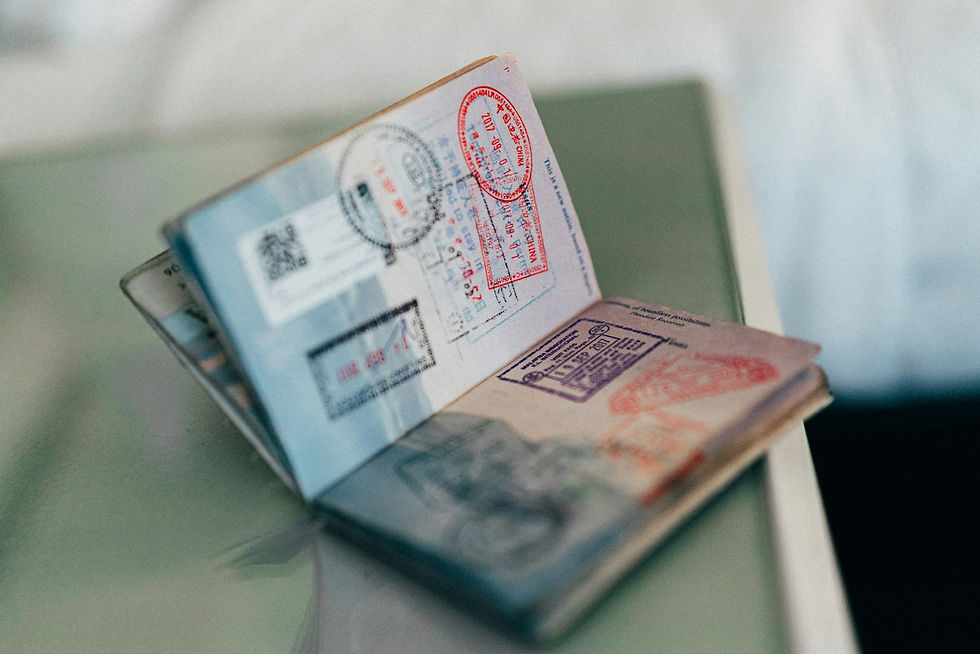
Document preparation, not surgery, is where most Gulf patients lose time. Photo: Kit / Unsplash
Prayer, halal food and scheduling around Ramadan
Seoul has a central mosque in Itaewon and a growing number of halal-certified and Muslim-friendly restaurants, particularly in that district and around Myeongdong, so dietary needs are manageable although not as effortless as in the Gulf. Hospital catering is a separate matter: if you expect an overnight stay, ask specifically what the facility can provide rather than assuming, and plan to supplement.
Scheduling around Ramadan deserves thought rather than avoidance. Fasting is not compatible with the fluid intake, analgesia and wound healing demands of the early post-operative period, and most patients either schedule outside the month or seek guidance on exemption. Our guide to halal food, prayer and dietary needs for Muslim patients covers the practical detail, including how to raise fasting and medication timing with the clinic.
Payment, currency and documentation
Korean clinics treating international patients generally expect self-payment, usually a deposit to hold the surgical date and the balance before or on the day of surgery. International credit cards are widely accepted but per-transaction limits frequently cause problems at the point of payment, so raise your limit in advance or arrange a wire transfer with the clinic's account details confirmed through an official channel rather than a messaging app. Cash carried across borders is subject to declaration thresholds in both directions. Keep itemised receipts and an English treatment record, both because some employers and insurers in the Gulf will consider partial reimbursement and because any later revision discussion depends on documentation. Our guide to paying for cosmetic surgery in Korea covers cards, transfers and the VAT refund scheme.
Choosing a clinic and verifying any agency
Agencies are common on the Gulf to Korea route and a good one genuinely reduces friction: they coordinate the visa documents, interpretation, transfers and accommodation. The problem is that the market includes unregistered brokers, and a patient in Riyadh has limited ability to tell them apart from a well-presented website. Korea operates a registration system for foreign patient attraction businesses, and checking registration is the single most useful verification step available to you.
Our guides to checking whether an agency is legally registered and to agencies versus booking a clinic directly set out the trade-offs. Separately, verify the clinic itself and the operating surgeon, and get the quote itemised before paying any deposit.
Verify before paying any deposit That any agency is registered with the Korean foreign patient attraction system. The name and credentials of the surgeon who will actually operate. An itemised quote, including anaesthesia, tests, overnight stay and revision terms. Whether Arabic or English interpretation covers consent and post-operative instructions. Who you contact after hours and after you return to the Kingdom. |
Aftercare once you are back in the Gulf
This is the part most often underplanned. Suture removal, drain removal where relevant, and the first wound review should ideally happen in Korea, which is why clinics ask for stays of seven to fourteen days rather than the three or four that patients often budget for. If you must return earlier, arrange in advance who will remove sutures at home and make sure your Korean clinic provides written instructions that another clinician can follow. Remote follow-up by photograph and video consultation is now routine at clinics used to international patients, but time zones, platform availability and whether the service is charged all vary. Confirm before you leave who you contact if something changes at week three, and how prescription medication you are taking home is documented for customs. Our guides to remote follow-up after returning home and to taking prescription medication home from Korea cover both.
Frequently asked questions
Can Saudi citizens enter Korea without a visa for treatment?
No. Saudi Arabia is not on Korea's visa-free list, and the electronic travel authorisation available to visa-waiver nationals does not apply. A visa must be obtained in advance from the Korean diplomatic mission responsible for your region. Because requirements and processing times change, confirm the current position directly rather than relying on third-party summaries.
Can a family member travel with me as a companion?
Yes, and this is anticipated in the medical visa framework, which provides for accompanying companions. The companion normally needs their own application with documentation linking them to the patient and to the treatment. Clinics experienced with Gulf patients can usually supply the supporting letters for both applications.
How long should I plan to stay in Korea?
Most clinics ask for seven to fourteen days depending on the procedure, so that suture removal and the first wound review happen before you fly. Minor non-surgical treatments need far less. Patients frequently budget three or four days and then have to extend, which is more expensive and more disruptive than planning the longer stay from the start.
Is Arabic interpretation available at Seoul clinics?
It is available but less widely than English or Chinese, and is often provided by a contracted external interpreter rather than in-house staff. Ask specifically whether it covers the consent discussion and the post-operative instructions, not only the first consultation, and request written instructions you can take home.
Will any of the cost be reimbursed at home?
That depends entirely on your own insurer or employer scheme, not on the Korean clinic. Purely cosmetic treatment is generally excluded, while a functional or reconstructive component is sometimes considered. Korean clinics will not bill a foreign insurer directly, so keep an itemised receipt and an English treatment record and submit them yourself.
Sources
Ministry of Justice, Republic of Korea, Korea Immigration Service
Ministry of Foreign Affairs, Republic of Korea
Korea Health Industry Development Institute (KHIDI)
Korean Society of Plastic and Reconstructive Surgeons (KSPRS)
Related reading
About this guide: Korean Plastic Surgery Info is an independent information service for international patients. We do not operate clinics, do not perform procedures and do not receive commission on treatment bookings. This article is general information, not medical advice, and does not replace an in-person consultation with a licensed specialist. Entry and visa rules change; always confirm current requirements with the Korean diplomatic mission responsible for your region before booking.

Comments