
Taiwan to Korea for Cosmetic Surgery: Entry, Payment and Aftercare at Home
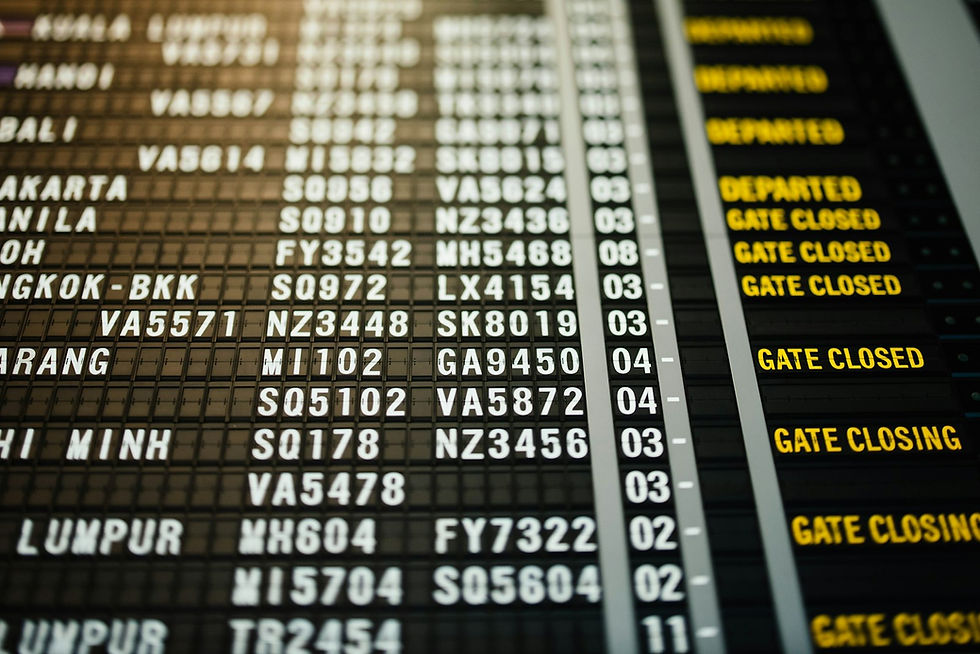
A trip built around a recovery window looks different from a trip built around a cheap fare. Photo: CHUTTERSNAP / Unsplash
Quick answer A Taiwan-to-Korea cosmetic surgery trip is a short-haul medical journey that needs three things settled before you book: the entry and documentation basis for your stay, a written quote that names its exclusions, and a named plan for who reviews your wound after you fly home. Most Taiwanese patients fly in and out within a week. The clinical risk sits in the part of the recovery that happens after that week, in Taiwan, where the operating surgeon cannot examine you. Published reviews of cosmetic surgery performed abroad find infection to be the most commonly reported complication [1][4] - which is why the aftercare plan, not the price, is the part worth negotiating hardest.
In this guide
Why the Taiwan-Korea route is unusually easy - and what that hides
Entry and documents: what to settle before you book a flight
Insurance and reimbursement: the questions to ask, not assume
Mandarin support is not the same as a trained medical interpreter
Aftercare back in Taiwan: who examines you, with what records
Why the Taiwan-Korea route is unusually easy - and what that hides
Taipei to Seoul is barely two and a half hours in the air, with multiple daily services into Incheon and Gimpo, and that convenience is both real and a trap: a flight this short feels like a weekend, and weekends are a poor unit of measurement for surgical recovery. Almost everything that goes wrong does so in the two to six weeks after you land back home, when the operating surgeon is in another jurisdiction. The planning task is not to decide whether Korea is a reasonable destination. It is to decide in advance who holds clinical responsibility for each phase: the Korean clinic for the operation and the first days, and some named, reachable clinician in Taiwan for everything after your return flight. If you cannot answer the second half of that sentence, the trip is not planned yet. Our guide to remote follow-up after returning home from Korea covers the mechanics of the handover in detail.
Entry and documents: what to settle before you book a flight
Entry rules for short visits change, and they are set by Korean immigration authorities rather than by clinics or agencies. Confirm your own current position directly with the Korean diplomatic mission responsible for Taiwan, or through Korea's official electronic travel authorisation channel, close to your travel date - not from a clinic's marketing page and not from a forum post written two years ago. If your treatment plan requires a longer stay than a short visit permits, that is a different visa category and needs a clinic-issued invitation and supporting paperwork, which takes weeks rather than days.
Separately from immigration, there is a verification step most patients skip. Korea requires medical institutions that recruit foreign patients to register for that activity, and registry data is published through the national open-data portal; the Gyeongju City dataset is one worked example, listing registered institutions by name and street address and last updated in June 2026 [5]. The practical use is simple: if a facility courting your business does not appear in the relevant registry, ask why before you pay a deposit. The same logic applies to intermediaries - see how to check whether a Korean medical tourism agency is legally registered.
Item | Settle it before you | Why it matters later |
Entry basis for your stay | Book flights | A treatment plan longer than a short visit allows needs a different visa category and clinic-issued paperwork |
Clinic's foreign-patient registration | Pay a deposit | Registration is a legal requirement in Korea and registry data is public [5] |
Named operating surgeon | Sign consent | The consenting doctor and the operating doctor are not always the same person |
Written itemised quote | Transfer money | Anaesthesia, overnight stay, dressings and revision terms are the usual exclusions |
Earliest safe flight date | Book the return leg | ASPS suggests waiting 5-7 days after body procedures and 7-10 days after facial procedures [4] |
Taiwan-side follow-up clinician | Fly out of Seoul | Someone has to examine the wound in week two, and it will not be your surgeon |
Operative note and implant records | Leave the clinic | A local doctor treating a complication needs to know what was actually done [4] |
Insurance and reimbursement: the questions to ask, not assume
Cosmetic procedures chosen for appearance sit outside the scope of most public health coverage and of ordinary travel insurance, and the exclusions usually extend to the complications of those procedures as well. Four questions settle most of it. Does the policy exclude elective cosmetic surgery performed outside Taiwan? Does it also exclude treatment for a complication of that surgery, including treatment received back home? Does it cover medical evacuation or an extended hotel stay if you are told not to fly? And is there any provision for reimbursing a locally performed revision? Get these in writing before you pay for anything, because a verbal yes from a call-centre agent is not a coverage decision. Our overview of medical insurance for cosmetic surgery tourism sets out the common exclusion patterns.
One structural point is worth absorbing. ASPS notes that there are no laws in the patient's home country that mandate training standards or protect patients for surgery performed abroad, so legal recourse for negligence may be limited or absent [4]. The same asymmetry applies in reverse: a dispute will usually be governed by the contract you signed in Korea, which is why reading it matters. See consent forms and treatment contracts at Korean clinics.
Paying: the quote, the exclusions and the currency spread
Ask for the quote as an itemised document in Korean won, with a line for every component: surgeon's fee, anaesthesia and the anaesthesia provider's qualification, facility fee, any overnight stay, post-operative dressings and medication, follow-up visits included during your stay, and the terms under which a revision would or would not be charged. A single bundled figure is not a quote; it is a headline. The items most often left out are precisely the ones that are hard to decline once you are admitted.
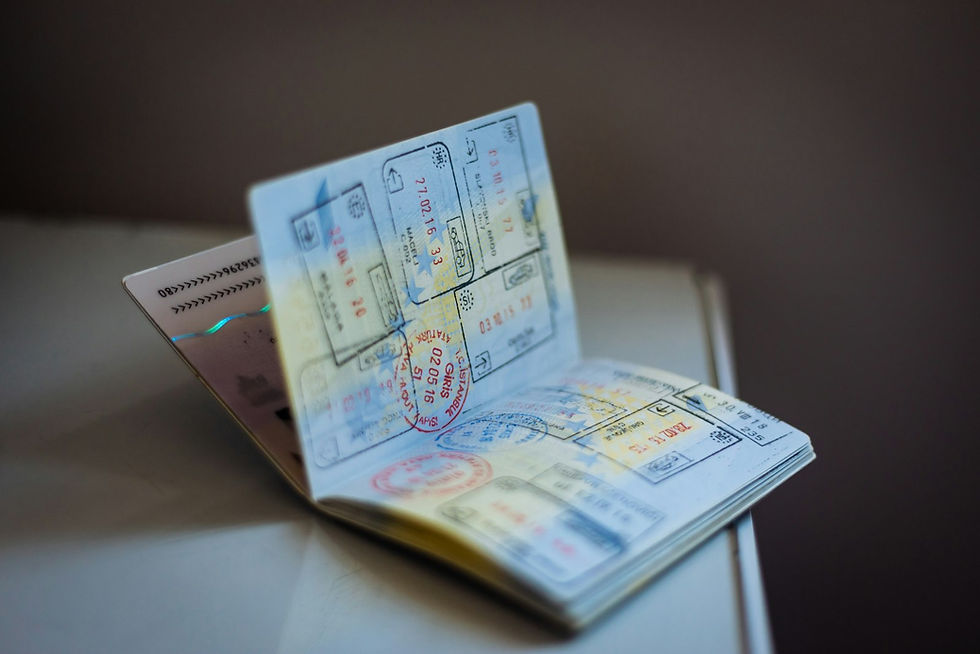
The paperwork that matters is not only what gets you in, but what a doctor at home can read afterwards. Photo: Global Residence Index / Unsplash
Mandarin support is not the same as a trained medical interpreter
Taiwanese patients face a specific wrinkle. Written materials in Simplified Chinese are readable but not native to you, terminology for the same procedure can differ between Taiwan and mainland usage, and a translated consent form is not the same as an interpreted conversation. Ask who will interpret the consent discussion specifically, whether that person has medical interpreting training, and whether you may bring your own interpreter. See medical interpreters at Korean clinics and how to verify medical interpreter quality.
Two more checks belong here because they are language-dependent in practice. Confirm the identity and qualification of the person who will actually operate - the consulting doctor is not always the operating doctor, as who performs your surgery in Korea explains - and ask, in a language you fully control, what the clinic's documented plan is if something goes wrong during the procedure. How Korean clinics handle medical emergencies sets out what a credible answer looks like.
Building the itinerary around the recovery, not the fare
Sequence the trip backwards from the earliest date it is reasonable to fly. ASPS suggests waiting five to seven days after body procedures such as liposuction and breast augmentation, and seven to ten days after facial procedures such as facelift, eyelid surgery and rhinoplasty [4]. The reasoning is vascular rather than cosmetic: surgery raises the risk of venous thromboembolism and pulmonary embolism, a long flight raises it independently, and combining the two raises it further [4].
Resist the holiday overlay. ASPS specifically advises against sunbathing, alcohol, swimming and extensive touring after surgery [4], all of which are the default content of a Seoul trip. If the itinerary contains both a procedure and a sightseeing programme, one of them is going to be done badly. Carry your medication documentation properly as well: taking prescription medication home from Korea covers the customs paperwork.
Before you book the return leg Ask the clinic, in writing, for the earliest date it considers safe for you to fly, for the specific procedure planned. Keep the ticket changeable. A delay of two or three days is a routine clinical outcome, not a failure. If you are advised not to fly, you need somewhere to stay and someone to see - decide where and who before you need it. Both long flights and surgery independently raise the risk of blood clots and pulmonary embolism, and the combination raises it further [4]. Treat the waiting period as part of the treatment, not as lost holiday. |
Aftercare back in Taiwan: who examines you, with what records
Do three things before you fly out of Seoul. Collect the complete operative record - operative note, anaesthesia record, implant or device identifiers and lot numbers, imaging, and the medication list - because that is the document set a Taiwanese clinician needs to act. Identify, by name, a clinician in Taiwan who has agreed to review your wound in week two and who has seen those records. And establish the escalation route with the Korean clinic: who answers, in which language, within what hours, and what their threshold is for telling you to present to an emergency department locally rather than wait.
Then learn the warning signs, because you are the monitoring system. Spreading redness, increasing rather than decreasing pain, fever, discharge, wound separation, sudden asymmetry or swelling, breathlessness and calf pain all warrant same-day assessment where you are, not a photo sent to Seoul and a wait. Warning signs of complications after cosmetic surgery lists them with thresholds, and revision policies at Korean clinics explains what a return trip would and would not cost you. For stitch care specifically, see suture removal after going home.
What the research says
A systematic review of 589 patients who travelled abroad and came back with complications
Alkaelani and colleagues conducted a PRISMA-guided systematic review of complications following aesthetic procedures performed abroad, pooling 44 studies covering 589 patients who presented with complications after travelling for cosmetic surgery. Infection was the most commonly reported complication, and most of the causative organisms were bacterial, with a notable share drawn from the Mycobacterium genus. The authors conclude by calling on regulators to educate the public so that patients can make informed choices [1].
The limitation is structural and important: a review of patients who presented with complications has no denominator. It describes the shape of the harm, not its frequency, and it cannot tell a Taiwanese patient what their personal risk is at a specific Seoul clinic. What it does tell you is where to aim your scrutiny - at sterility, implant provenance and the infection pathway - rather than at the headline price.
A review of 370 infection cases, graded for severity
Gilardi and colleagues reviewed 36 articles describing 370 patients who developed infections after cosmetic surgery abroad, grading severity with the Clavien-Dindo classification. Most reports originated from the United States and the Dominican Republic was the most frequent destination, so the geography reflects the research base rather than a global risk ranking. Within the procedure mix, abdominoplasty was the procedure most often linked to infection, while gluteal augmentation was associated with the most severe cases [2].
For a reader planning a Korean trip, the useful inference is not about Korea at all - it is that reported infection burden tracks the invasiveness of the procedure and the sterility of the setting far more than the destination's reputation. A less invasive procedure at a properly accredited facility is a materially different proposition from a large body contouring case, wherever it is performed.
Why the pre-travel conversation is the neglected part
Pereira and colleagues' review in the Journal of Travel Medicine surveys the scale and economics of cosmetic surgery tourism and concludes that the travel medicine literature pays little attention to non-surgical morbidity in these travellers, recommending both original research on patient motivations and pre-travel psychological counselling [3]. It is a narrative review rather than a pooled analysis, so it generates hypotheses rather than effect sizes.
The implication for your own planning is concrete. The pre-trip consultation most patients optimise is the clinical one. The one the literature says is systematically missing is the conversation about motivation, expectation and what an unsatisfactory result would mean for you - the questions worth answering while you can still change your mind at no cost.
Frequently asked questions
How long should a Taiwan-to-Korea cosmetic surgery trip actually be?
Longer than the flight suggests. ASPS guidance points to waiting five to seven days after body procedures and seven to ten days after facial procedures before flying [4], and the first in-person follow-up should fall inside your stay. Plan around a week to ten days for most facial work, and keep the return ticket changeable.
Will insurance cover a complication after I return to Taiwan?
Often not. Elective cosmetic surgery and its complications are commonly excluded from both public coverage and ordinary travel policies, including treatment received after you return. Ask your insurer and your public insurance administrator in writing before you travel, and keep their reply.
Is a Mandarin-speaking coordinator enough for the consent discussion?
A coordinator is a commercial role and a medical interpreter is a clinical one. Ask specifically who will interpret the risk and consent conversation, whether they have medical interpreting training, and whether you may bring your own interpreter.
What records should I insist on before leaving Seoul?
The operative note, the anaesthesia record, implant or device identifiers with lot numbers, any imaging, and the full medication list. ASPS notes that local doctors may not know what technique the original surgeon used, which makes later treatment harder [4] - these documents are what close that gap.
References
Alkaelani MT, et al. Complications of Medical Tourism in Aesthetic Surgery: A Systematic Review. Annals of Plastic Surgery, 2023. PMID 37962261; DOI 10.1097/SAP.0000000000003683.
Gilardi R, et al. Infective complications of cosmetic tourism: A systematic literature review. Journal of Plastic, Reconstructive & Aesthetic Surgery, 2023. PMID 37320953; DOI 10.1016/j.bjps.2023.05.021.
Pereira RT, et al. Aesthetic journeys: a review of cosmetic surgery tourism. Journal of Travel Medicine, 2018. PMID 29924349; DOI 10.1093/jtm/tay042.
American Society of Plastic Surgeons. Briefing Paper: Cosmetic Surgery Tourism. ASPS. Reviewed 13 October 2026.
Public Data Portal of Korea. Medical institutions registered to attract foreign patients (open dataset). data.go.kr, provided by Gyeongju City, Gyeongsangbuk-do; record updated 14 June 2026.
Related reading
Thai Patients Planning Cosmetic Surgery in Korea: Visa, Interpreters and Payment
Paying for Cosmetic Surgery in Korea: Cards, Cash, Wire Transfers and VAT Refunds
Clinical Records to Request Before You Leave a Korean Clinic
Korean Clinic Credentials: Board Certification, KSPRS Membership and Hospital Tiers
About this guide: Korean Plastic Surgery Info is an independent editorial resource for international patients researching cosmetic and reconstructive care in South Korea. We do not own, operate or represent any clinic, and we receive no commission, referral fee or booking fee from any hospital mentioned on this site. This article is general information, not medical advice, and it cannot substitute for an in-person assessment by a licensed physician who has examined you. Last reviewed 13 October 2026.


Comments