
Medical Travel from Indonesia to Korea for Cosmetic Surgery: Visa, Halal Needs and Costs - A Complete Guide
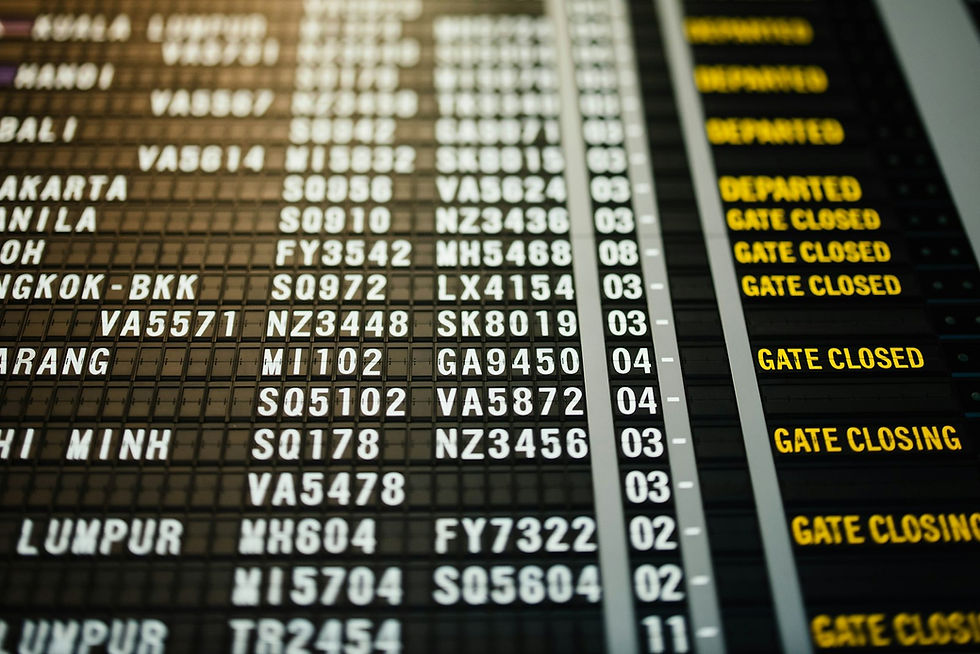
Entry documents and flight timing are the first two decisions in a medical trip, not the last. Photo: CHUTTERSNAP / Unsplash
Quick answer Medical travel from Indonesia to Korea for cosmetic surgery is a planned trip in which an Indonesian resident books a Korean clinic in advance, enters on the correct visa category, stays through the early healing window, and arranges follow-up remotely after flying home. The flight is short. What derails Indonesian patients is sequencing: entry documents confirmed too late, a quote that omits anesthesia or pre-operative tests, a return flight booked inside the window when flying is discouraged, and no named clinician to contact once a wound looks wrong in Jakarta. Plan the trip backwards from the follow-up you will need at home, not forwards from the procedure date.
In this guide
Indonesia sits within roughly a five-to-seven-hour flight of Seoul, which puts Korea among the more practical destinations for Indonesian patients weighing cosmetic surgery abroad. The flight is rarely the hard part. The hard part is sequencing: entry documents, a clinic that answers clearly in a language you read, a schedule that respects the healing window, a payment route that actually clears across borders, and a plan for the weeks after you are back home. This guide sets out that sequence in the order it has to happen, flags the questions patients commonly leave until too late, and points to the published evidence on how foreign patients experience Korean hospitals.
Entry documents: what to confirm, and in what order
Entry rules are the one part of this trip you should never take from a blog, including this one. Visa categories, required supporting documents and electronic travel authorisation schemes change, sometimes at short notice and sometimes differently for different nationalities. Treat the Korean embassy or consulate with jurisdiction over your province in Indonesia as the only authority on what you personally need, and get the answer before you pay a deposit.
What you can usefully prepare in advance is the paperwork a consular officer or airline is likely to want to see, whatever the category: a passport with comfortable remaining validity, evidence of where you will stay, a return or onward ticket, and - if you are travelling specifically for treatment - documentation from the clinic confirming the appointment. Clinics that are formally registered to attract foreign patients are generally the ones able to issue that documentation; if a clinic cannot, that is worth noticing before you commit. You can check a counterparty's registration status using the method in our guide to verifying whether a Korean medical tourism agency is legally registered.
Keep your stated purpose, your documents and your itinerary consistent with each other. Mismatches between a tourist entry and a surgical schedule are the kind of thing that causes problems at the border and, later, with insurance claims.
What the trip actually costs
Published procedure prices are the smallest part of the problem. The quote you are given is a line item; the trip is a budget. Rather than quoting figures that vary by clinic, surgeon seniority, implant or device brand, season and exchange rate, it is more useful to know which lines exist, who can confirm each one, and where patients are most often surprised.
Ask for the quote in writing, itemised, with the currency stated and a validity date. If a clinic will only give a total, that is information about the clinic. Our line-by-line method for comparing quotes from multiple Korean clinics sets out how to put two quotes on the same basis.
Cost line | What it usually covers | Confirm with | Common surprise |
Procedure fee | Surgeon's fee for the named operation only | Clinic, in writing | Quoted per side, or excluding the implant or graft material |
Anesthesia and facility | Anesthesia type, monitoring, operating room, overnight stay if any | Clinic, in writing | Sedation quoted, general anesthesia charged later |
Pre-operative tests | Blood work, ECG and any imaging done on arrival | Clinic | Billed separately; an abnormal result delays surgery |
Medication and dressings | Post-operative drugs, dressing changes, scar care | Clinic | Dressing visits charged per visit |
Interpreter | Consultation and consent interpreting; sometimes ward rounds | Clinic or agency | Covered for consultation only, not for follow-up |
Accommodation and transfers | Nights in Seoul plus airport and clinic transport | You | Extra nights needed when surgery is rescheduled |
Revision or complication care | What is free, what is charged, and for how long | Clinic policy document | Policy requires you to return to Korea in person |
Building a schedule around the healing window
Work backwards. Decide the earliest date you can realistically be back at work in Indonesia, subtract the period your surgeon says you should remain reachable in Korea, and only then look at flights. Patients who book the return leg first almost always end up either flying too early or paying to change the ticket.
Two fixed points usually shape the calendar. The first is pre-operative testing, which generally happens after you land rather than before, and which can postpone surgery if something comes back abnormal - our guide to pre-operative tests at Korean clinics explains what is typically checked. The second is suture removal or the first dressing change, which your surgeon will want to do in person.
Build in slack. A schedule with no spare days converts any ordinary delay into either a missed follow-up or an expensive ticket change.
Flying after surgery is a clinical decision, not a logistics one The U.S. Centers for Disease Control and Prevention notes that flying after surgery can increase the risk of blood clots, including deep vein thrombosis, and recommends delaying air travel for 10-14 days following major surgery, particularly operations involving the chest [4]. CDC also advises a pre-travel consultation with a healthcare provider at least 4-6 weeks before the trip, and travel health insurance that covers medical evacuation [4]. Ask your surgeon for a date specific to your procedure and your own risk factors, and treat it as binding. |
Most of the aftercare period is spent at home, not in Seoul. Photo: Rafli Raihan / Unsplash
Language support: interpreters and written records
Indonesian-language support at Korean clinics is less established than Russian, Mongolian or Chinese support, which have longer histories in the market. In practice many Indonesian patients will be working in English, or through an interpreter arranged by the clinic or an agency.
This matters most at two moments: consent, and the conversation where a complication is explained. Ask who will interpret at each, whether that person is a clinic employee, and whether anything you sign will exist in a language you read. Our guide to verifying medical interpreter quality in Korea covers the questions worth asking before you book.
Language is not a minor comfort issue in this setting. In a 256-patient survey at three tertiary hospitals in Seoul, communication emerged as one of seven distinct dimensions along which foreign patients perceived Korean healthcare culture as different from their own, alongside food, the healthcare system, the facility, religion, hospital care and services, and cultural values [1].
Ask for your operative record, the implant or device details and your discharge instructions in writing before you leave the clinic. A clinician in Indonesia who has to assess a problem later will need them.
Halal food, prayer and timing around Ramadan
For Muslim patients these are not peripheral questions. Hospital food, prayer space and the gender of attending staff can materially affect whether a recovery week is tolerable, and they are easier to arrange before admission than after.
Ask the clinic directly: whether halal meals can be arranged on the ward or must be brought in, whether there is a prayer space in or near the building, and whether a same-gender nurse or interpreter can be requested for examinations. Serviced accommodation near the clinic with a kitchen is often the simpler answer for food. Our guide to halal food, prayer and dietary needs for Muslim patients having surgery in Korea goes through the practical options in Seoul.
Food and religion were both among the dimensions on which foreign patients in the Seoul survey reported the largest perceived differences from healthcare at home, with the food dimension showing the highest internal consistency of all seven factors measured [1]. That is a measured observation about perception, not a complaint about Korean hospitals - but it suggests these are the areas where unaddressed assumptions cause the most friction.
On timing: if your trip would fall during Ramadan, raise fasting with your surgeon early. Peri-operative hydration, medication schedules and wound healing are clinical matters, and the decision belongs with your clinician rather than your itinerary.
Paying a Korean clinic from Indonesia
Expect to use a mix of methods. Deposits are commonly paid by international wire transfer; balances are often settled in person by card or in Korean won. Each route has friction worth anticipating.
For wires, confirm the exact beneficiary name, that it matches the clinic's registered business name, and who absorbs the intermediary bank fees. For cards, check your issuer's daily and per-transaction international limits before you travel - a declined card on discharge day is a common and avoidable problem. For cash, understand Indonesian and Korean currency declaration thresholds before you carry anything substantial.
Insist on a receipt that names the clinic, the procedure and the amount, and keep it. You will need it for any later dispute, and for the tax or insurance paperwork some patients attempt afterwards. Our guide to medical dispute resolution in Korea sets out what recourse exists and what it requires in documentation.
Treat any request to pay a person rather than the clinic, or to pay into an account in a third country, as a reason to stop and verify.
Aftercare once you are back in Indonesia
Most of your healing happens at home. Before you fly, you should have three things: written discharge instructions, a named contact at the clinic who answers, and a local clinician who has agreed in advance to look at the wound if needed.
Infection is the complication that most often becomes serious because of distance. CDC warns that infections are a recognised risk of medical tourism, including wound and bloodstream infections, and that highly drug-resistant bacteria and fungi have caused disease outbreaks among medical tourists [4]. That risk is not hypothetical in this region: WHO reports that about one in six laboratory-confirmed bacterial infections worldwide were antibiotic-resistant in 2023, rising to roughly one in three in the South-East Asia and Eastern Mediterranean regions [5]. Practically, this means a wound that looks wrong deserves same-day local review rather than a photo sent to Seoul and a week of waiting.
Plan for cost as well as logistics. CDC notes that travellers may need care at home if complications develop, that follow-up can be expensive, and that it may not be covered by insurance [4]. Set money aside for that possibility rather than assuming it away.
For routine follow-up, remote review is reasonable and increasingly normal - see our guide to remote follow-up after returning home from Korea. For anything that might be infection, bleeding or airway-related, local and in person wins.
What the research says
Two peer-reviewed studies are worth reading before you book, because they describe the system you are entering rather than the procedure you are buying.
Foreign patients perceive Korean healthcare as culturally different - and the differences are measurable
Sung and Park developed and tested an instrument for measuring perceived cultural difference among foreign patients in Korea, in a two-phase study published in BMC Health Services Research. Phase one built a 41-item tool through literature review, content validity rating, interviews and a pilot; phase two administered it to 256 foreign patients at three tertiary hospitals in Seoul between August and October 2016, grouped by primary language: Arabic (n = 70), Russian (n = 60), Mongolian (n = 60), Chinese (n = 40) and English (n = 23) [1].
Patients perceived Korean healthcare culture as significantly different from that of their home country (t = 25.716, df = 255, p < 0.001). Exploratory factor analysis identified seven factors - hospital care and services, food, the healthcare system, communication, the healthcare facility, religion and cultural values - explaining 73.70% of cumulative variance, with a content validity index of 0.97 and overall Cronbach's alpha of 0.96. Perceived difference varied by language group, with the Russian-speaking group reporting the greatest differences [1].
Limitations the authors state: the tool measures the magnitude of perceived difference but not its direction, so a high score does not mean dissatisfaction; recruitment was confined to three tertiary hospitals in Seoul and may not generalise to other settings; and validity testing used exploratory factor analysis and Cronbach's alpha only. Note also that no Indonesian or Malay language group was included, so Indonesian patients are not directly represented.
What this means for you: the areas where you are most likely to be surprised are predictable - food, communication, religious accommodation and how the system itself works. All four can be asked about in writing before you book, which is the cheapest intervention available to you.
The evidence base is about policy and economics, not patient outcomes
A bilingual systematic review published in BMC Public Health searched PubMed and JSTOR, supplemented by a grey-literature search of policy documents, government websites and national statistics, and included 14 peer-reviewed articles and 9 websites addressing South Korean medical tourism policy [2].
The authors found the literature concentrated on the legislative history of Korea's pro-medical-tourism policy, the economics of industry growth, and medical tourists' experiences. They report a lack of studies analysing the healthcare impact of these policies or comparing their costs and benefits against other destinations, and note continued advocacy for further deregulation and investment in the sector [2].
Limitations: the review found no randomised controlled trials, so standard risk-of-bias tools could not be applied, and quantitative measures were not comparable across studies; the authors flag possible publication, surveillance, context and omission biases.
What this means for you: the absence of comparative outcome data is itself information. Nobody can hand you a robust published comparison of complication rates between Korean clinics and clinics at home, so clinic-specific due diligence - surgeon credentials, the written revision policy, what happens if something goes wrong - does the work that published outcome data cannot.
Frequently asked questions
Do Indonesian citizens need a visa to travel to Korea for cosmetic surgery?
This depends on your nationality, passport, intended length of stay and purpose, and the rules change. Confirm your own case with the Korean embassy or consulate with jurisdiction over your area in Indonesia before paying any deposit, and ask specifically whether your treatment plan requires a medical visa category rather than a short-term visit entry.
How long should I stay in Korea?
Long enough to attend pre-operative testing, the procedure, and the first in-person follow-up your surgeon requires, plus slack for delay. Your surgeon sets that window procedure by procedure. Separately, CDC recommends delaying air travel for 10-14 days after major surgery, particularly chest surgery, because of clot risk [4].
Can I arrange halal meals and a prayer space at a Korean clinic?
Often, but not automatically, and arrangements vary widely between hospitals and smaller clinics. Ask in writing before admission whether halal meals can be arranged on the ward or must be brought in, whether prayer space is available nearby, and whether a same-gender nurse or interpreter can be requested.
Will my Indonesian insurance cover a complication after I get home?
Elective cosmetic surgery abroad is frequently excluded, and so is follow-up for its complications. CDC notes that follow-up care at home can be expensive and may not be covered, so travellers should plan to pay out of pocket if needed [4]. Check your policy wording before you travel, not after.
Is a video consultation before flying worth doing?
It is a reasonable way to test how clearly a clinic communicates and to get an itemised quote before you commit. In a study of 182 foreign patients who had video consultations with a Korean tertiary hospital between 2021 and 2023, 30 patients (16.5%) went on to travel for in-person treatment [3]. Treat it as screening, not as a substitute for in-person assessment.
References
Sung S, Park HA. Perceived cultural differences in healthcare for foreign patients visiting South Korea: tool development and measurement. BMC Health Services Research, 2019;19:197. PMID 30922381. DOI 10.1186/s12913-019-3965-9
Hall CM, et al. A bilingual systematic review of South Korean medical tourism: a need to rethink policy and priorities for public health?. BMC Public Health, 2021;21:658. PMID 33823817. DOI 10.1186/s12889-021-10642-x
Byun M, et al. Video Consultations for Patients Traveling Internationally for Medical Care: An Observational Study of a Tertiary Hospital in South Korea. International Journal of Environmental Research and Public Health, 2025;22(4):481. PMID 40283710. DOI 10.3390/ijerph22040481
U.S. Centers for Disease Control and Prevention. Medical Tourism - Travelers' Health. CDC, accessed 12 October 2026.
World Health Organization. Antimicrobial resistance (fact sheet). WHO, accessed 12 October 2026.
Related reading
Medical Travel from Malaysia to Korea: Trip Planning, Language Access and Aftercare
Halal Food, Prayer and Dietary Needs for Muslim Patients Having Surgery in Korea
How to Compare Quotes from Multiple Korean Clinics: A Complete Line-by-Line Method
Remote Follow-Up After Returning Home from Korea: Telemedicine, Photo Reviews and Aftercare
Taking Prescription Medication Home from Korea: Customs Rules and Documentation
About this guide: Korean Plastic Surgery Info is an independent English, Japanese and Chinese language reference for international patients considering treatment in South Korea. We do not own, operate or represent any clinic or hospital, and we do not take referral fees or commissions from providers. Nothing here is medical advice, a diagnosis or a treatment recommendation. Prices, entry rules and clinic policies change; verify everything that matters to your case directly with a licensed clinician and with the relevant government authority before you travel or pay.


Comments