
ECM Skin Boosters in Korea: What Extracellular Matrix Injectables Actually Do

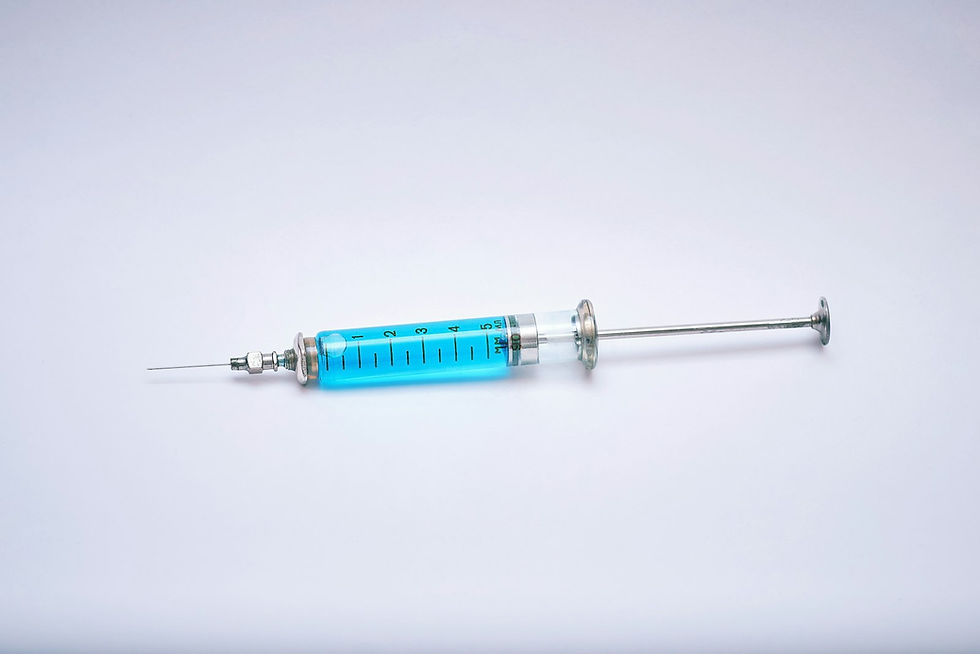
ECM-based injectables arrive in small single-use vials and are reconstituted at the clinic. Photo: MS Simi / Unsplash
Quick answer An ECM skin booster is an injectable made from processed extracellular matrix — the structural protein scaffold that surrounds cells in human or animal tissue. It is marketed to improve skin quality rather than add volume. The supporting evidence is currently preclinical and early-stage, so treat specific rejuvenation claims with caution.
In this guide
Korean skin booster menus have expanded faster than the evidence behind them. Over the last two years a new material class has appeared alongside the polynucleotide and poly-L-lactic acid products most international patients have heard of: injectables built from extracellular matrix, usually abbreviated ECM and sometimes sold under names referencing human tissue origin. The marketing language is appealing and the biology is real. The clinical evidence, as of late 2026, is considerably thinner than the marketing implies, and that gap is the useful thing to understand before you book.
What extracellular matrix is, in plain terms
Skin is not simply a sheet of cells. Between and around the cells sits a dense three-dimensional scaffold of collagens, elastin, laminin, nidogen, proteoglycans and signalling proteins. That scaffold is the extracellular matrix. It provides mechanical strength, holds water, anchors the epidermis to the dermis at the basement membrane, and acts as a reservoir of growth factors that tell fibroblasts what to build.
Ageing degrades the scaffold rather than merely thinning it. Collagen synthesis falls, matrix metalloproteinases that break down collagen become more active, and the basement membrane loses density. The theory behind an ECM injectable is that delivering scaffold components into the dermis gives resident fibroblasts a template to repopulate and remodel, rather than simply adding filler bulk. That is a different proposition from a hyaluronic acid filler, which works primarily by occupying space and holding water.
How ECM boosters differ from the boosters you already know
Most patients arriving in Seoul have already read about polynucleotide products such as Rejuran, poly-L-lactic acid products, and hyaluronic-acid-based skin boosters. ECM products sit in a separate column. Our comparison of polynucleotide versus PDLLA boosters covers the two established classes in detail; the table below places ECM beside them.
Material class | What it is | Primary proposed mechanism | Evidence maturity |
Hyaluronic acid booster | Cross-linked or non-cross-linked sugar polymer | Water binding, immediate hydration | Mature, large clinical literature |
Polynucleotide / PDRN | Purified DNA fragments, commonly salmon-derived | Fibroblast signalling, anti-inflammatory effect | Moderate, including human studies |
Poly-L-lactic acid (PDLLA) | Synthetic biodegradable polymer | Controlled foreign-body response driving collagen | Moderate, with filler-era precedent |
ECM / acellular dermal matrix | Decellularised tissue scaffold proteins | Scaffold for fibroblast infiltration and remodelling | Early; largely preclinical for aesthetic use |
Vitamin and coenzyme blends | Ascorbic acid, niacinamide, glutathione, hyaluronate | Antioxidant and mitochondrial support | Early; animal and in vitro |
The right-hand column is the one to read first. A material can be biologically plausible and still lack the human trial data that would let a clinician tell you how much improvement to expect, how long it lasts, or how often it fails. ECM products for skin quality are currently in that position. For context on the better-evidenced option most patients end up choosing instead, see our guide to how Rejuran and PDRN boosters work.

Decellularisation and sterilisation processing differ between products and are rarely disclosed to patients. Photo: National Cancer Institute / Unsplash
What the preclinical evidence actually shows
Two published studies are worth reading closely, because between them they illustrate both the promise and the limits of the current evidence.
The first examined an injectable ECM-support formulation in aged mouse skin and in an oxidative stress model using human keratinocytes. It reported reduced oxidative stress markers, improved mitochondrial biogenesis markers, lower matrix metalloproteinase levels, increased collagen I and III expression, denser basement membrane on microscopy, and measurably improved skin elasticity in treated aged mice [1].
The second assessed a supercritical carbon dioxide processed acellular dermal matrix implanted in rats over six months. It found the material was non-toxic to fibroblasts in vitro, reduced inflammatory cytokines including TNF-alpha, IL-6, IL-1beta and MCP-1, and in vivo showed fibroblast infiltration, collagen I and III deposition, new vessel formation and declining MMP2, MMP3 and MMP9 levels over time [2].
Both are coherent and both point the same direction. Neither is a human aesthetic trial. The first used mice and cultured cells; the second used rats and an implanted rather than injected format. Effect sizes are reported as statistical significance in figures rather than as numbers a patient could use, and one of the two carries a commercial author affiliation with the product manufacturer. That is not a reason to dismiss the work, but it is a reason to resist any clinic that quotes a percentage improvement, because no such figure exists in the published record for aesthetic ECM injection in humans.
What this means at the consultation If a clinic presents ECM boosters as proven for skin rejuvenation, ask which human study they are relying on and for the citation. A reasonable clinic will tell you the evidence is early and offer it as an adjunct rather than a primary treatment. If you want the option with the most human data behind it, that is currently not ECM. Say so and ask for the alternatives to be compared on evidence rather than on novelty. |
What regulators say about injectable materials
Regulatory status is where patients are most often misled, partly because approval for one indication is routinely presented as approval in general. The US Food and Drug Administration approves absorbable fillers for moderate to severe facial wrinkles and folds and for augmenting lips, cheeks, chin and the back of the hand, and approves non-absorbable fillers only for nasolabial folds and cheek acne scars, in adults aged 22 and over [3].
The same guidance is explicit about what is not approved. The FDA recommends against using injectable fillers for body contouring including breast and buttock augmentation, and against injection into the glabella, nose, periorbital area, forehead or neck. It states that injectable silicone is not approved for any aesthetic procedure, warns that needle-free injection devices are not approved for filler use, notes that no dermal filler is approved for over-the-counter sale, and advises against buying filler products online because counterfeits have been found in circulation [3].
The American Society of Plastic Surgeons frames fillers as temporary treatments that diminish facial lines and restore volume, states plainly that ongoing treatment is needed for lasting results, and notes that fillers cannot substitute for surgery such as a facelift or brow lift, though they may delay the point at which surgery becomes appropriate [4]. The same logic applies to boosters: a product that improves skin quality is not a substitute for a procedure that repositions tissue.
Note what this does and does not tell you about ECM specifically. These are filler frameworks, and an ECM skin booster may be regulated in Korea as a device, a biological material or a cosmetic injectable depending on its composition and processing. Asking the clinic which Korean regulatory category the specific product falls into, and asking to see the packaging, is a fair request and a quick way to establish whether anyone at the clinic knows.
Who is a reasonable candidate, and who is not
Skin boosters of any class address texture, fine lines, dullness and dermal quality. They do not lift, they do not reduce significant volume loss, and they do not correct structural changes. A patient in their thirties with early textural change and good underlying structure is the population boosters were designed for. A patient with laxity who wants a lifting result will be disappointed by any booster, and should be given a surgical or energy-based comparison instead.
There are also people for whom an early-evidence biological material is a poor choice regardless of candidacy on skin grounds. Anyone with a known sensitivity to the source tissue or to processing residues, anyone with active skin infection or inflammation at the injection site, anyone immunosuppressed, and anyone pregnant or breastfeeding should be excluded or deferred. Patients with a history of hypertrophic scarring or keloid formation warrant particular caution with any injected material that is intended to provoke a remodelling response. These are conversations for a physician with your history in front of them, not for a treatment menu.
One further consideration applies specifically to international patients. Boosters are course-based, and a course that requires three or four sessions spaced two to four weeks apart does not fit a one-week trip. Read any single-session offer in that light.
Cost, course structure and realistic timelines in Korea
Prices for newer materials move quickly and vary widely between districts, so we do not publish figures that would be stale within a quarter. What is stable is the structure, and the structure is where the cost surprises live.
Expect a course rather than a single treatment, expect the quoted price to be per session rather than per course, and expect topical anaesthesia, aftercare products and follow-up review to be separately itemised or excluded. Ask for the total cost of the full recommended course in writing before the first session, not the price of session one. Our guide to domestic versus foreign patient quotations covers the broader pattern of how Korean quotations are assembled.
On timelines, be sceptical of immediate-result language. Mechanisms that depend on fibroblast activity and matrix remodelling operate over weeks to months by definition. Any visible change within days of injection is more likely to be hydration and post-injection swelling than remodelling, and it will settle.
Questions to ask a Seoul clinic
Question | Why it matters |
What is the exact product name and manufacturer? | Lets you check the material rather than a category label |
What is the source tissue, and how was it decellularised? | Processing differs between products and affects residues |
Which Korean regulatory category does it fall under? | Device, biologic and cosmetic routes carry different review |
Which human studies support this for skin quality? | Tests whether the clinic is relying on preclinical data |
How many sessions, and what is the total course cost? | Per-session quoting is the most common cost surprise |
What is the better-evidenced alternative for my skin? | A good clinic will name one without being pushed |
Who injects, and are they a licensed physician? | Injection technique governs most avoidable complications |
What happens if I react, after I have flown home? | Aftercare across borders needs a named contact and a plan |
If the answers to the first four questions are vague, you are being sold a category rather than a product. That is a sufficient reason to defer. There is no clinical urgency to a skin booster, and the evidence base for this particular material class will be meaningfully better in two years than it is now. Deferring costs you nothing except the novelty, and a clinic that treats a deferral as a problem has told you something useful about its priorities. For a worked example of how to weigh a newer injectable against its risk profile, see our discussion of temple filler and vascular risk.
What the research says
An injectable ECM-support formulation in aged mouse skin
Byun and colleagues published a combined in vitro and in vivo study in Antioxidants in March 2023. The in vitro component exposed human primary epidermal keratinocytes to hydrogen peroxide to induce oxidative stress and senescence, then treated them with the test formulation or with ascorbic acid, niacinamide or buffer. The in vivo component used male C57BL/6 mice, comparing a young group at nine weeks with an aged group at twelve months; aged mice received the formulation or distilled water by intradermal microneedle injection, dosed at 100 microlitres per square centimetre per day, twice every two weeks for four weeks. The formulation itself is a liquid containing ascorbic acid and niacinamide at 0.25 percent each, plus coenzymes, glutathione and sodium hyaluronate. Reported findings included reduced NADPH oxidase activity, restored superoxide dismutase, less oxidative DNA damage, improved mitochondrial biogenesis markers, reduced MMP1, MMP2, MMP3 and MMP9, increased COL1A1 and COL3A1, increased laminin and nidogen with denser basement membrane on microscopy, and increased skin elasticity on instrument measurement [1].
Limitation: this is a mouse and cell-culture study with no human subjects, group sizes and numerical effect sizes are not reported in the text, and one author affiliation is with the company producing the formulation. What it means for a patient is that the biological rationale is supported in animals but the human dose, durability and failure rate remain unknown. It is a reason to keep watching the material, not a reason to choose it over a better-evidenced alternative today.
A supercritical CO2 acellular dermal matrix over six months in rats
Nguyen and colleagues published a study in Frontiers in Bioengineering and Biotechnology in 2024 assessing a supercritical carbon dioxide decellularised acellular dermal matrix. The in vitro work used fibroblasts and found the matrix non-cytotoxic, with fibroblasts infiltrating the scaffold after incubation, and showed reduction of lipopolysaccharide-induced TNF-alpha, IL-6, IL-1beta and MCP-1. The in vivo work implanted the matrix in Sprague Dawley rats and evaluated it at six months, reporting fewer inflammatory cells, increased fibroblast infiltration, collagen formation, endothelial cell formation and macrophage polarisation, with MMP2, MMP3 and MMP9 declining over time and collagen I and III deposition increasing [2].
Limitation: the study used a rat model with a single six-month endpoint, animal numbers and effect sizes are not stated in the available text, and the material was implanted rather than injected as an aesthetic booster. What it means for a patient is that decellularised matrix integrates and remodels rather than simply persisting as a foreign body, which supports the mechanism; it says nothing about how an injected cosmetic dose behaves in human facial skin, and it should not be cited to you as evidence of a cosmetic result.
Frequently asked questions
Is an ECM skin booster the same thing as a filler?
No. A filler is intended to occupy space and create contour. A skin booster is intended to change skin quality — texture, fine lines, hydration and dermal density — without adding meaningful volume. The FDA approval framework for fillers covers wrinkles, folds and specific augmentation sites, and is not a substitute for evidence that a booster improves skin quality [3].
How long do the effects last?
There is no reliable published duration for ECM boosters in human facial skin, which is why we are not giving a number. Any figure quoted to you is an estimate from clinical impression rather than from trial data, and it is fair to ask the clinic to say so.
Is it safe if it is derived from human tissue?
Human-derived does not mean inert. Decellularisation and sterilisation processing determines what remains in the product, and processing methods differ between manufacturers. The relevant safety questions are the source, the processing method, the regulatory category and the injector's licence — not the word human on the box.
Should I choose an ECM booster or a polynucleotide booster?
On the current evidence, polynucleotide products have more human data behind them, and a clinic comparing the two on evidence rather than novelty will usually say the same. That is a conversation for a physician who has examined your skin, and the honest answer may be that neither class addresses what is actually bothering you.
References
Byun KA, Oh S, Batsukh S, Kim MJ, Lee JH, Park HJ, Chung MS, Son KH, Byun K. The Extracellular Matrix Vitalizer RA Increased Skin Elasticity by Modulating Mitochondrial Function in Aged Animal Skin. Antioxidants, 2023;12(3):694.
Nguyen NG, Thuy LL, Pham NC, Trinh TT, Pham TN, Zhang XR, Jin YX, Zhou SY, Han J, Nam SY, Heo CY. Assessment of inflammatory suppression and fibroblast infiltration in tissue remodelling by supercritical CO2 acellular dermal matrix utilizing Sprague Dawley models. Frontiers in Bioengineering and Biotechnology, 2024;12.
U.S. Food and Drug Administration. Dermal Fillers (Soft Tissue Fillers). FDA Medical Devices.
American Society of Plastic Surgeons. Dermal Fillers. ASPS Cosmetic Procedures.
Related reading
About this guide: Korean Plastic Surgery Info is an independent information service operated by Team Performance. We do not own, operate or represent any hospital or clinic, and we receive no referral commission for any provider named or unnamed on this site. This article is general health information for international patients, not medical advice, and it cannot replace an in-person assessment by a licensed physician. Published 19 October 2026. Written and fact-checked by the editorial team against the sources listed above.


Comments