
Yvoire and Cleviel Fillers in Korea: How High-Concentration HA Brands Differ — A Complete Guide

Concentration and cross-linking, not brand name, determine how a hyaluronic acid filler behaves in tissue. Photo: Camila Mofsovich / Unsplash
Quick answer Yvoire and Cleviel are two Korean hyaluronic acid filler families that differ principally in the concentration of hyaluronic acid they carry and in how that concentration changes their handling, firmness and intended placement. Yvoire is a broad conventional range from a major Korean chemical manufacturer, with separate products graded from fine-line work up to contouring. Cleviel is marketed on a notably higher hyaluronic acid concentration in a monophasic format, positioned for projection in areas such as the nose tip and chin. Higher concentration changes mechanical behaviour, not safety class: the vascular risks of any filler remain the same and depend on anatomy and injector skill.
In this guide
What concentration and cross-linking actually change
Every hyaluronic acid filler is a gel of hyaluronic acid chains chemically bonded to one another. Three variables dominate how it performs once injected: how much hyaluronic acid is present per millilitre, how heavily the chains are cross-linked, and whether the gel is a single uniform phase or a suspension of particles. Those variables determine elastic modulus, which is the practical measure of whether a gel holds a shape against tissue pressure or spreads and integrates softly.
Patients are usually shown brand names and left to infer quality. The more useful framing is the mechanical one: a soft, low-concentration gel placed superficially for fine lines and a firm, high-concentration gel placed deep for projection are different tools, and neither is a better version of the other. Our comparison of Neuramis and Saypha HA filler brands covers the same logic across a different pair.
The Yvoire range
Yvoire is the dermal filler line of a large Korean chemical company and is one of the most widely distributed domestic ranges in Korean clinics. Like most established families it is sold as a graded set rather than a single product, with lighter preparations intended for fine lines and superficial hydration and progressively firmer preparations for volumising and contouring. The naming within the range signals the intended tier rather than a different active substance.
The practical significance of a broad graded range is that a competent injector can match gel firmness to tissue depth across a whole face using one familiar family, which reduces the variables when something needs adjusting later. The limitation is that for high-projection work in a small, mobile area, the firmest member of a conventional range may still be softer than the task requires.
The Cleviel approach
Cleviel is a Korean filler positioned explicitly on concentration. It is marketed as a monophasic gel carrying substantially more hyaluronic acid per millilitre than the roughly twenty to twenty-five milligrams per millilitre typical of conventional HA fillers, with the manufacturer’s figure stated on the product insert; confirm the exact number for the specific variant with your clinic rather than relying on a general description.
The intended consequence is a gel that resists deformation and holds projection with a smaller injected volume. That is attractive in regions where the tissue envelope is tight and the aesthetic goal is height rather than softness, notably the nasal dorsum and tip and the chin. The trade-off is that firmer, more cohesive gels are less forgiving of superficial placement: in thin skin they are more likely to be palpable or visible as a defined edge.

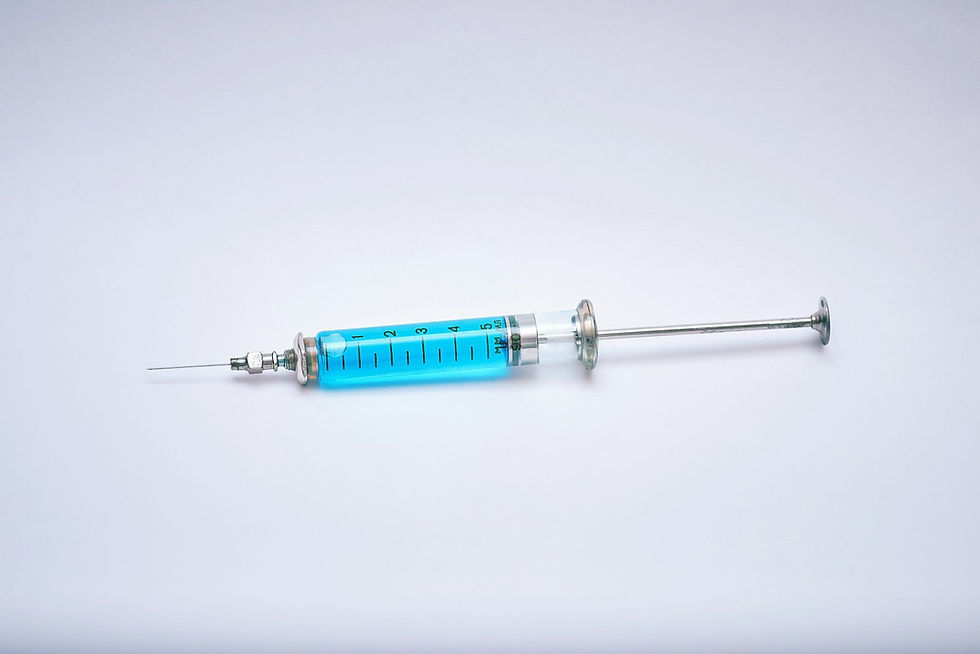
Ask to see the sealed box and the lot number before injection. Photo: camera obscura / Unsplash
The two families compared
The table below summarises the structural distinction rather than ranking the products. Treat any clinic that frames this as a quality hierarchy with some caution.
Attribute | Yvoire range | Cleviel |
Positioning | Broad graded conventional range | High-concentration, projection-focused |
Format | Products across several firmness tiers | Monophasic cohesive gel |
HA concentration | Conventional range | Marketed as substantially higher |
Typical depth | Superficial through deep, by tier | Deep, on or near bone |
Best suited to | Whole-face planning with one family | Nose tip, dorsum, chin projection |
Main limitation | Firmest tier may lack projection | Less forgiving if placed superficially |
Where each tends to be used
In practice a Korean clinic planning a full face will often reach for a graded conventional range for the cheeks, temples and perioral area, where integration and natural movement matter more than rigidity. For a nasal dorsum or a chin where the patient wants definite height from a small volume, a high-concentration cohesive gel is the more logical choice.
Non-surgical nose work deserves specific caution regardless of which product is chosen, because the nasal vasculature makes it one of the highest-risk filler sites on the face. Biostimulatory alternatives behave differently again and are not interchangeable with either family; our guide to Ellanse and Radiesse explains why a collagen-stimulating product cannot simply be substituted for a hyaluronic acid gel.
The risks that concentration does not reduce
The serious complications of filler injection are vascular rather than material. If gel enters an artery it can obstruct flow downstream, and the consequences range from skin necrosis to, rarely, visual loss when the injection site communicates with the ophthalmic circulation. This risk is a function of anatomy, injection site, needle or cannula handling and injector training. A higher-concentration product does not raise or lower the risk class; it changes how the gel behaves mechanically once correctly placed.
What does change risk is where the product is injected and by whom. The glabella, nasal dorsum and tip, and the area around the tear trough carry the highest published complication rates for filler anywhere on the face.
Before you consent to any filler injection Confirm that the clinic stocks hyaluronidase on site and that the injecting doctor has a written protocol for suspected vascular occlusion. Ask what the warning signs are and who to contact outside clinic hours, particularly if you are flying home within days. Severe or disproportionate pain during or after injection, blanching of the skin, mottled discolouration, or any change in vision are emergencies and require immediate contact with the clinic, not an appointment next week. Disclose pregnancy, breastfeeding, autoimmune conditions, anticoagulant use and any previous filler or thread placement in the same area. |
Verifying the product before it is injected
Both families are widely counterfeited, and counterfeit filler is a documented problem in markets where demand outpaces regulated supply. The practical defence is simple and non-confrontational: ask to see the sealed box, check that the carton and syringe labelling match, note the lot number and expiry, and ask for the product name and lot to be recorded in your chart. A clinic that treats this as routine is behaving normally; one that resists it is telling you something.
Ask the injecting doctor directly which product and which variant within the range they intend to use and why that tier suits your anatomy. Our 15-point clinic verification checklist sets out the wider due diligence, and our breakdown of hidden costs covers the per-syringe pricing questions that commonly surface at the consultation.
Choosing between them, honestly
For most patients the choice is made by the injector on anatomical grounds and is not worth overthinking, provided the reasoning is explained. The question that matters is not which brand is better but whether the gel firmness has been matched to the tissue depth and the aesthetic goal, and whether the injector can articulate that match in a sentence.
Be sceptical of three things: a clinic that uses one product for every indication, a quoted price that does not specify the product and volume, and any claim of permanence. Hyaluronic acid fillers are temporary by design, which is also their principal safety advantage, since a hyaluronic acid gel can be dissolved and a permanent implant cannot.
Frequently asked questions
Is a higher-concentration filler better?
Not inherently. Higher concentration generally means a firmer, more cohesive gel that holds projection with less volume, which suits deep placement for height. In thin or superficial tissue that same firmness is a disadvantage, because it is more likely to be palpable or to show a defined edge.
Can Yvoire and Cleviel be dissolved if I dislike the result?
Both are hyaluronic acid gels, so they can in principle be broken down with hyaluronidase, which is the main safety advantage of the hyaluronic acid class. Dissolving is a medical procedure with its own risks, including allergic reaction, and it should be performed by the treating doctor rather than improvised elsewhere.
How long does each last?
Published durability ranges for hyaluronic acid fillers vary by product, placement depth, injected volume and individual metabolism, and clinic figures are often optimistic. Ask for the manufacturer’s stated range for the specific variant, and treat any single confident number as a marketing estimate rather than a prediction for you.
Are these products approved in Korea?
Both families are Korean-manufactured and sold domestically under the national regulatory framework for medical devices. Approval status and approved indications differ between individual variants, so ask the clinic to confirm the specific product it intends to use and check the labelling on the sealed box.
Should I worry about counterfeit filler?
It is a documented risk in high-demand markets, which is why inspecting the sealed carton, matching the labelling and recording the lot number in your chart is worthwhile. This is a routine request at a well-run clinic; resistance to it is itself useful information.
Sources
Ministry of Food and Drug Safety, Republic of Korea — medical device approval framework for dermal fillers
PubMed — published literature on hyaluronic acid filler rheology and vascular complications
Korean Society of Plastic and Reconstructive Surgeons (KSPRS) — guidance on injectable procedures and complication management
Korean Medical Association (KMA) — professional standards on informed consent and product disclosure
Related reading
About this guide: Korean Plastic Surgery Info is an independent editorial resource on aesthetic medicine and medical travel in Korea, operated by a Seoul-based team. We do not own or operate clinics, we are not affiliated with any filler manufacturer or distributor, and we take no commission on treatment booked by readers. This article is general information, not medical advice, and no part of it substitutes for assessment by a licensed physician. Product specifications, variants and regulatory status change; confirm current details with your treating clinic and the product labelling.


Comments