
Rejuran HB, Rejuran i and Rejuran Healer: How the Three Formulations Differ — A Complete Guide

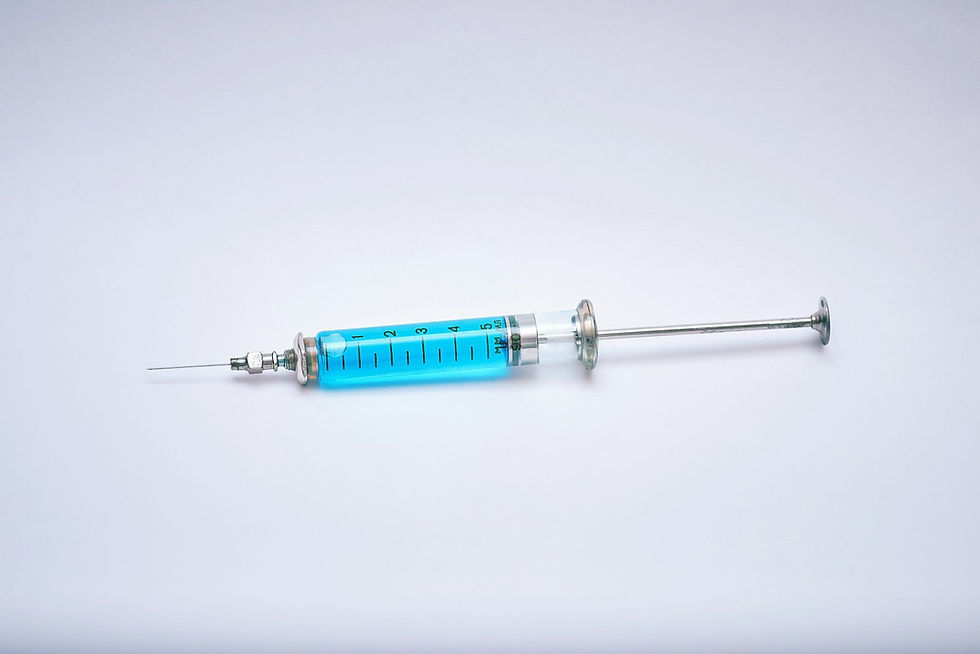
The three Rejuran formulations share one active family but differ in concentration, volume and intended depth. Photo: Content Pixie / Unsplash
Quick answer Rejuran is a family of polynucleotide skin boosters from a single Korean manufacturer, and the three common variants differ mainly in concentration, injection volume, whether hyaluronic acid is added, and the facial area they are formulated for. The baseline product targets general facial skin quality; the HB version adds hyaluronic acid for a hydration and smoothing effect; the i version is a smaller, lighter preparation intended for the thin skin around the eyes. None of the three is a volumising filler, and the clinical evidence base is still thinner than the marketing suggests.
In this guide
What polynucleotide injectables actually are
Polynucleotide injectables use purified DNA fragments, in this product family derived from salmon, as the active component. The proposed mechanism is not volume replacement but a conditioning effect on the dermis: the fragments are thought to act on the tissue environment in ways that may influence hydration, fibroblast behaviour and wound-healing signalling. That framing matters, because it sets what the category can plausibly do. A polynucleotide product is not expected to lift a fold or project a contour the way a cross-linked gel does.
Korean regulatory classification for these preparations is handled by the national drug and device authority, and the specific classification differs between products in ways that affect how they may be marketed. The underlying biology is covered in more depth in our guide to how Rejuran and polynucleotide injectables work.
The three formulations side by side
Clinics frequently describe these as different treatments. It is more accurate to treat them as one active family presented in three delivery formats, each matched to a different tissue thickness and a different complaint. The practical consequence is that a clinic recommending the same formulation for the mid-cheek and the lower eyelid is not individualising the plan.
Formulation | Added hyaluronic acid | Typical target area | Primary complaint addressed | Papule visibility |
Baseline (Healer) | No | Full face, cheeks, neck | Overall skin quality and texture | Moderate, short-lived |
HB | Yes | Full face, fine-line areas | Hydration and surface smoothing | Usually lower |
i | No | Periorbital, lower eyelid | Thin, crepey under-eye skin | Lower, but area is unforgiving |
All three | — | Dermal, not subcutaneous | Not volume loss | Operator-dependent |
The baseline Rejuran formulation
The original preparation, commonly marketed as the Healer version, is the reference product in the range and the one most of the published work on the family relates to. It is placed into the dermis across the treatment area in a grid of small deposits rather than injected as a bolus, and the immediate appearance is a scatter of small raised papules that settle over roughly a day to several days depending on depth and technique.
It is the usual choice when the complaint is general: skin that looks dull, feels rough, or has lost the fine elasticity that makes makeup sit well. It is a poor choice when the complaint is actually volume loss in the midface or a deepening nasolabial fold, which is a filler question rather than a booster question.
Rejuran HB: polynucleotide plus hyaluronic acid
The HB variant combines the polynucleotide component with hyaluronic acid. The addition is not intended to create projection; the hyaluronic acid here is at a concentration and format meant to hold water in the dermis and improve the immediate surface result, which is why patients often report a smoother look sooner than with the baseline product.
That earlier visible effect is also the main source of confusion. Part of what a patient sees in the first week after HB is hydration, and hydration is reversible. Judging the treatment at day seven therefore overstates it; judging at week eight, after the hydration component has normalised, gives a fairer reading of what the polynucleotide element contributed. Patients weighing HB against a bio-remodelling hyaluronic acid product should read our guide to Profhilo and bio-remodelling injectables, since the two overlap more than clinics usually acknowledge.

Polynucleotide is a purified fraction, not a filler gel. Photo: Zhang liven / Unsplash
Rejuran i: the formulation for periorbital skin
The i variant is a smaller-volume, lighter preparation formulated for the thin skin of the lower eyelid and the periorbital area. The rationale is straightforward: eyelid skin is thin, highly vascular and intolerant of the deposit sizes that are acceptable on the cheek, so a product intended for that area needs a different handling profile.
The periorbital area is also where technique dominates product choice. Deposits placed too superficially remain visible longer; placed too deep they risk bruising in a region where bruising is conspicuous for a fortnight. A patient whose actual concern is a hollow tear trough rather than skin texture is in filler territory, and the distinction is set out in our guide to tear trough filler in Korea.
What to expect, and when to raise a concern Small raised papules, pinpoint bleeding and mild swelling immediately after treatment are expected with this category and typically settle within days. Bruising is common around the eyes. What is not routine is increasing pain, spreading redness, visible blanching of the skin at the time of injection, or any change in vision. Those warrant immediate contact with the treating clinic rather than waiting for the next scheduled visit. Discuss any bleeding disorder, anticoagulant use, pregnancy, breastfeeding, active skin infection or fish-protein allergy before treatment. |
Sessions, downtime and realistic timelines
All three are session-based rather than single-treatment products. A typical initial course is several sessions spaced a few weeks apart, with maintenance at longer intervals afterwards; the exact spacing is a clinical decision that depends on the formulation, the area and how the skin responds. Anyone promising a definitive result from one session is overselling the category.
For patients travelling internationally this is the central planning problem: a multi-session course does not fit a short trip. Either the course is compressed in a way that departs from the usual spacing, or it is split across visits, or the first session is done in Korea and continued elsewhere with a different product. Each of those involves a trade-off worth naming explicitly before the first injection.
How it compares with other boosters
The booster category now contains several mechanistically distinct products that are marketed almost interchangeably. Polynucleotide preparations sit apart from poly-D,L-lactic acid products, which work by provoking a collagen response over months, and apart from PDRN-based preparations that use a related but differently processed nucleotide fraction. Our comparison of polynucleotide and PDLLA boosters addresses that split directly, and the Cellenest and Rejuran comparison covers the closest neighbour in the range.
The practical test when a clinic proposes a booster is to ask which mechanism is being targeted and why that mechanism suits your specific complaint. A clinic that cannot answer that is selling a product rather than planning a treatment.
What the evidence does not settle
The honest position is that the polynucleotide category has a plausible mechanism, a reasonable short-term safety record in trained hands, and a published evidence base that remains limited in size and duration. Comparative trials against the obvious alternatives are scarce, long-term durability data are thin, and much of the material circulating online originates with manufacturers or clinics rather than independent investigators.
That does not make the category unreasonable. It does mean a patient should expect modest, incremental change in skin quality rather than transformation, should be sceptical of before-and-after imagery where lighting and makeup differ, and should weigh the cost of a multi-session course against alternatives with longer track records. Searching the primary literature through a database such as PubMed, rather than relying on clinic summaries, is the most useful thing an interested patient can do.
Frequently asked questions
Is Rejuran a filler?
No. The polynucleotide component is intended to act on dermal tissue quality rather than to replace lost volume, and none of the three formulations is designed to project a contour. If the underlying complaint is volume loss or a structural hollow, a filler or fat-based approach is the relevant discussion.
Which formulation is right for under-eye skin?
The i variant is the one formulated for periorbital skin, on the basis that eyelid skin is thin and intolerant of larger deposits. That said, a hollow tear trough is an anatomical problem that a booster will not address, so the first question is whether your concern is skin texture or lost volume.
How many sessions are usually needed?
These are course-based treatments rather than one-off procedures, typically beginning with several sessions a few weeks apart followed by longer-interval maintenance. Exact spacing is a clinical judgement. Any claim of a definitive result from a single session should be treated sceptically.
Are the small bumps after treatment normal?
Small raised papules at the injection points are an expected feature of this category and generally settle within about a day to several days depending on depth and technique. Increasing pain, spreading redness, skin blanching during injection or any visual change are not routine and warrant contacting the clinic immediately.
Can I complete a course during a short trip to Korea?
A standard course does not fit a short visit. The realistic options are compressing the schedule, splitting the course across trips, or continuing with a comparable product at home. Each involves a compromise, so agree the plan with the clinic before the first session rather than afterwards.
Sources
Ministry of Food and Drug Safety, Republic of Korea — classification of injectable polynucleotide preparations
PubMed — published clinical literature on polynucleotide and nucleotide-fraction skin treatments
Korean Society of Plastic and Reconstructive Surgeons (KSPRS) — guidance on injectable aesthetic procedures
Korean Medical Association (KMA) — professional standards on advertising and informed consent
Related reading
About this guide: Korean Plastic Surgery Info is an independent editorial resource on aesthetic medicine and medical travel in Korea, operated by a Seoul-based team. We do not own or operate clinics, we are not affiliated with any manufacturer, and we take no commission on treatment booked by readers. This article is general information, not medical advice, and no part of it substitutes for assessment by a licensed physician. Product availability, regulatory classification and formulation details change; confirm current specifics with your treating clinic.


Comments