
Diabetes and Cosmetic Surgery in Korea: HbA1c Thresholds, Glycemic Control and Wound Healing - A Complete Guide
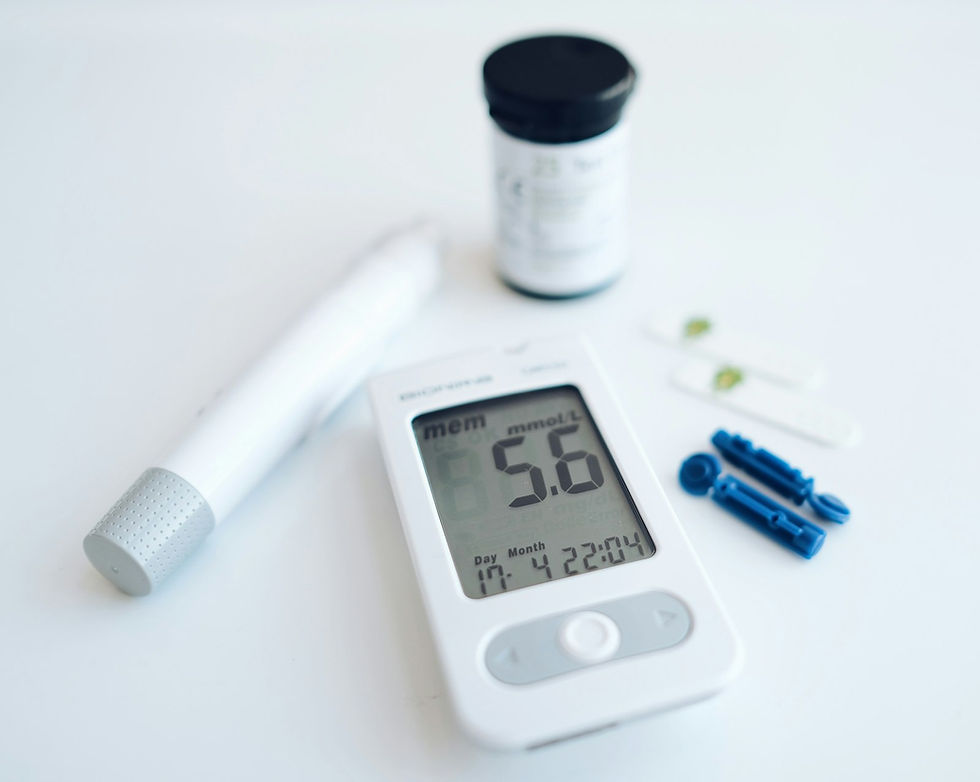
Korean clinics ask international patients for a recent HbA1c result, not a home meter reading. Photo: Jane Korsak / Unsplash
Quick answer Diabetes rarely disqualifies you from cosmetic surgery in Korea, but poor long-term blood sugar control usually moves your date rather than your diagnosis. Clinics ask for a laboratory HbA1c from the last three months plus a fasting glucose, because studies link higher preoperative HbA1c to more wound infection and more major complications after elective surgery [1]. The practical goal is a documented, stable result and a written note from the doctor who manages your diabetes at home.
In this guide
If you have type 1 or type 2 diabetes and you are planning surgery in Seoul, the question that decides your schedule is not whether a clinic will accept you. It is whether your blood sugar control is documented well enough for a surgeon to operate on a patient who will be on a long-haul flight home within two weeks. Korean clinics work with international patients on compressed timetables, so they front-load the screening: a laboratory HbA1c, a fasting glucose, a medication list, and often a letter from the physician who manages your condition. This guide explains what those numbers mean, what the published evidence actually says about surgical risk, and how to arrive with a file that does not get your date pushed.
Why Korean clinics ask about blood sugar before they confirm a date
Cosmetic surgery is elective, and elective surgery is where a clinic has the freedom to wait. For a domestic patient, a borderline result means another appointment next month. For an international patient, it means a cancelled flight, a forfeited deposit and a clinic that has lost an operating slot. That asymmetry is why pre-screening questions arrive early and in writing, usually alongside the same forms that cover height, weight and smoking status. If you have already read our guides on BMI and surgical eligibility and required nicotine quit windows, the structure will look familiar: the clinic is building a risk file before it commits a surgeon's time.
There is also a local context. Diabetes is common in the Korean adult population: the Korean Diabetes Association reports a prevalence of 15.5% among adults aged 30 and over, with prediabetes at 41.1% in the same age group, based on the 2021-2022 Korea National Health and Nutrition Examination Survey [3]. Korean surgical teams are therefore not unfamiliar with diabetic patients. What they are cautious about is operating on someone whose control they cannot verify and whose follow-up will happen on another continent.
The practical consequence is that a clinic's decision tends to hinge on documentation quality rather than on the diagnosis itself. A patient with well-recorded, stable numbers and a prescriber's letter is an easier case to schedule than a patient who says their diabetes is "under control" without a lab report to show.
What HbA1c measures, and which numbers appear in the research
Glycated hemoglobin, written HbA1c, reflects average blood glucose over roughly the preceding two to three months. That is why it is the number clinics ask for: a single fasting glucose can be fixed by skipping breakfast, while HbA1c is harder to improve in a week. A home glucose meter is useful for your own management, but it is not the document a surgical team will file.
There is no single international HbA1c threshold for cosmetic surgery, and the published studies do not use one either. A 2022 systematic review and meta-analysis in the Korean Journal of Anesthesiology pooled 12 studies with 25,036 patients undergoing elective major abdominal surgery and found that the cut-offs used across those studies ranged from 5.7% to 7.0%, with 6.5% (five studies) and 7.0% (four studies) the most common [1]. A separate retrospective cohort of 1,510 patients with lower-extremity fractures used a different split, classifying diabetes at an HbA1c of 6.5% or higher and treating 7.5% as the line between controlled and poorly controlled diabetes [2].
HbA1c value | Where this number comes from | What it is not |
5.7-7.0% | The full range of cut-offs used across the 12 pooled studies in the 2022 meta-analysis [1] | Not a single agreed surgical threshold |
6.5% | Most frequently used cut-off in that meta-analysis (5 of 12 studies); also the diabetes classification threshold in the 2023 fracture cohort [2] | Not a cosmetic-surgery-specific rule |
7.0% | Second most frequent cut-off in the meta-analysis (4 of 12 studies) [1] | Not a guarantee of a safe operation at or below it |
7.5% | Line used to separate controlled from poorly controlled diabetes in the 2023 cohort [2] | Not a universal definition of poor control |
Read that table as a map of the literature, not as a clinic policy. Individual Korean clinics set their own internal limits, and those limits differ by procedure length, anesthesia type and whether an overnight stay is involved.
What the risk numbers actually show
The 2022 meta-analysis reported higher odds of several complications in patients with elevated preoperative HbA1c: wound infection at an odds ratio of 1.21 (95% CI 1.08-1.36), major complications graded Clavien-Dindo 3-5 at 2.16 (1.54-3.01), overall complications at 2.12 (1.48-3.04), and anastomotic leak at 2.80 (1.63-4.83) [1]. Two signals did not survive adjustment for publication bias: overall infections fell to 1.18 (0.77-1.82) after trim-and-fill, and the pneumonia finding was not significant after the same adjustment [1].
That study's authors are explicit about the limits of their own result. Most included studies were retrospective, no randomised trials met the inclusion criteria, GRADE quality ratings were low to moderate, publication bias was detected for two outcomes, and they caution that "an association should not be mistaken for causation" [1]. They also call for randomised evidence before guidelines change.
The 2023 fracture cohort adds a useful complication to the picture. Among 1,510 patients, diabetes itself was associated with surgical site infection in multivariate analysis (OR 1.79, 95% CI 1.01-3.19, p = 0.047), and early surgical site infection was 5.9% in poorly controlled diabetes versus 1.5% in controlled diabetes (p = 0.032). Yet within the diabetic group, the admission HbA1c value was not independently associated with infection (OR 1.14, 95% CI 0.79-1.63, p = 0.48) [2]. In other words, the broad pattern of control mattered more than the single number on the day.
Important limits on all of this Neither cited study examined cosmetic surgery. One covers elective major abdominal surgery [1], the other lower-extremity fracture surgery [2]. The direction of the signal is informative; the exact numbers are not transferable to a blepharoplasty or a liposuction case. No HbA1c value makes an operation risk-free, and no clinic can promise an outcome. Any figure quoted to you as a guarantee should be treated as a reason to ask more questions. Only your own physician and the operating surgeon can set your target and decide whether to proceed. Nothing here replaces that conversation. |
A 12-week preparation timeline before you fly
HbA1c is a laboratory test. Clinics want the lab report, with the date on it. Photo: Trnava University / Unsplash
Because HbA1c moves slowly, the useful planning window is measured in months, not days. The sequence below is a scheduling framework for discussion with the doctor who manages your diabetes; the clinical decisions inside it are theirs, not ours.
Twelve weeks out: ask your own physician for a current HbA1c and a fasting glucose, and tell them you are planning elective surgery abroad on a specific date. This is the point at which a medication adjustment still has time to show up in the next test.
Eight weeks out: send the Korean clinic your first document set and ask directly what internal HbA1c limit they apply to the procedure you want. Getting the answer in writing now is cheaper than discovering it on arrival.
Six weeks out: book the pre-operative blood work your clinic requires, or confirm which of your home-country results they will accept. Clinics differ on whether they re-run everything in Seoul.
Four weeks out: repeat HbA1c if your physician advises it, so you travel with a result dated within three months of the surgery date.
Two weeks out: confirm the medication plan for the day before and the morning of surgery, in writing, with both your prescriber and the clinic.
On arrival: expect the clinic to run its own pre-operative tests regardless of what you bring, and to use its own laboratory values for the final decision.
What to send in your pre-screening documents
The file that moves fastest through a Korean clinic's international desk is boring and complete. Translated or English-language documents help; so does putting the collection date on every result.
A laboratory HbA1c report with the test date, not a screenshot of a phone app.
A fasting glucose from the same period.
Your previous two or three HbA1c values, so the trend is visible rather than a single snapshot.
A complete medication list with doses and timing, including insulin types and any GLP-1 receptor agonist.
A short letter from the physician who manages your diabetes stating that they are aware of the planned surgery.
Any record of diabetes-related complications that affect healing or anesthesia, as assessed by your own doctor.
If you are already assembling paperwork for other reasons, this overlaps with the record-keeping we describe in our guide to the clinical records to request from a Korean clinic — the same discipline applies in the other direction, before you travel.
How diabetes changes the plan, procedure by procedure
Operative length, wound size and anesthesia depth are the variables that tend to matter, so the same patient can be an easy case for one procedure and a deferred case for another. Short, local-anesthetic procedures with small incisions sit at one end. Long body-contouring operations with large undermined areas, drains and an overnight stay sit at the other, because they combine a bigger wound with more physiological stress.
Volume data gives a sense of which operations are common enough that most surgeons have a protocol ready. The American Society of Plastic Surgeons reported liposuction as the most popular cosmetic surgical procedure in its 2025 statistics, with breast augmentation up 11% and facial fat grafting showing the largest increase at 39% [4]. Those are US figures and do not describe the Korean market, but they indicate where high-volume experience is concentrated across the field.
Two practical questions are worth asking before you choose a procedure date: how long will I be under anesthesia, and will I stay overnight? The answers shape both the clinic's caution and your own recovery planning, which is why we treat them separately in our guides to anesthesia options and how long to stay in Korea.
Insulin, metformin, GLP-1 drugs and the day of surgery
Fasting before an operation and taking glucose-lowering medication are hard to combine safely, which is why the medication plan for the final 24 hours belongs to your prescriber and the anesthesia team, not to a blog or an agency coordinator. What you can do in advance is make sure both sides are talking to each other and that the instruction you receive is written down in a language you read.
GLP-1 receptor agonists have added a newer wrinkle. The ASPS reported that 82% of its member surgeons saw consultation requests related to GLP-1 medication use in its 2025 statistics [4], which tells you the subject is now routine in pre-operative conversations rather than exceptional. If you take one of these drugs, declare it at the first screening step rather than at the consultation on arrival.
Finally, build a cost buffer. Additional laboratory work, an anesthesiology consultation or an extra observation night are the kinds of line items that appear after a risk review, and they are exactly the sort of charge covered in our breakdown of hidden costs at Korean clinics.
What the research says
Pooled evidence from elective major abdominal surgery (2022)
Design and population: a systematic review and meta-analysis following PRISMA, pooling observational studies only — no randomised trials met inclusion. Twelve studies with 25,036 patients entered the quantitative analysis, using a random-effects model [1].
Results: elevated preoperative HbA1c was associated with wound infection (OR 1.21, 1.08-1.36), major complications (OR 2.16, 1.54-3.01), overall complications (OR 2.12, 1.48-3.04) and anastomotic leak (OR 2.80, 1.63-4.83). Overall infections lost significance after trim-and-fill adjustment (OR 1.18, 0.77-1.82) [1].
Limitation stated by the authors: most studies were retrospective, cut-offs were inconsistent, publication bias was detected for two outcomes, and GRADE ratings were low to moderate [1].
What this means for you: the signal is consistent enough that clinics are right to ask, but it comes from abdominal surgery, so treat it as a reason to document your control rather than as a predicted complication rate for a cosmetic procedure.
A cohort that separates diabetes from the HbA1c number (2023)
Design and population: a retrospective cohort of 1,510 consecutive patients with surgically treated lower-extremity fractures, of whom 335 (22%) had diabetes; 200 were classed as controlled and 135 as poorly controlled using a 7.5% HbA1c line [2].
Results: diabetes was associated with surgical site infection in multivariate analysis (OR 1.79, 1.01-3.19, p = 0.047), and early infection was 5.9% versus 1.5% between poorly controlled and controlled groups (p = 0.032). Within the diabetic group, admission HbA1c alone was not associated with infection (OR 1.14, 0.79-1.63, p = 0.48) [2].
Limitation stated by the authors: the study was based on chart review with inherent bias, multiple surgeons were involved, and glycemic control was classified from laboratory values without assessing neuropathy, retinopathy or renal disease [2].
What this means for you: a single good reading taken shortly before surgery is weaker evidence than a pattern of control over months. That is the argument for sending your HbA1c trend, not just your latest value.
Frequently asked questions
Will a Korean clinic refuse me because I have diabetes?
Usually not on the diagnosis alone. The more common outcome is a request for additional documentation or a later date. Clinics are more likely to decline when control cannot be verified, when the procedure is long, or when the planned flight home is soon after an operation with a large wound.
How recent does my HbA1c need to be?
Most clinics ask for a result from within the last three months, which matches what the test measures. Ask your clinic directly, in writing, because internal requirements vary and some will re-run the test in Seoul regardless.
Can I improve my HbA1c quickly before travelling?
HbA1c reflects two to three months of average glucose, so meaningful change takes time rather than days. Any plan to change medication or diet before surgery should come from the physician who manages your diabetes.
Is prediabetes treated the same way?
It is usually screened rather than treated as a barrier, but it is worth declaring. Prediabetes is common in the Korean adult population at 41.1% of those aged 30 and over [3], so clinics are used to seeing borderline values and will tell you what they do with them.
Do the published complication rates apply to my eyelid or nose surgery?
No. The cited figures come from abdominal and fracture surgery [1][2]. They explain why glycemic control is screened; they do not predict a rate for a specific cosmetic procedure. Ask your surgeon for their own experience with your operation.
References
Wong JKL, Ke Y, Ong YJ, et al. The impact of preoperative glycated hemoglobin (HbA1c) on postoperative complications after elective major abdominal surgery: a meta-analysis. Korean Journal of Anesthesiology, 2022;75(1):47-60. doi:10.4097/kja.21295
Morisaki S, et al. The role of preoperative glycemic control in decreasing surgical site infections in lower extremity fractures. Journal of Orthopaedic Surgery and Research, 2023;18:700. doi:10.1186/s13018-023-04204-7
Park SE, Ko SH, Kim JY, et al. Diabetes Fact Sheets in Korea 2024. Diabetes & Metabolism Journal (Korean Diabetes Association), 2025;49(1):24-33. doi:10.4093/dmj.2024.0818
American Society of Plastic Surgeons. Plastic Surgery Statistics (2025 procedural data). ASPS, 2026.
Related reading
About this guide: Korean Plastic Surgery Info is an independent information resource for international patients considering treatment in Korea. We do not own or operate clinics and we receive no commission on treatment. This article is general information drawn from the published sources listed above and is not medical advice; decisions about your diabetes management and your suitability for surgery belong to your own physician and your operating surgeon.


Comments