
Medical Travel from India to Korea for Cosmetic Surgery: Visa, Costs and Clinic Access — A Complete Guide

Unlike visa-free nationalities, Indian patients must complete a Korean visa application before booking surgery. Photo: Previn Samuel / Unsplash
Quick answer Medical travel from India to Korea for cosmetic surgery requires a visa obtained in advance, a flight of roughly seven to eleven hours to Seoul depending on your city, and a stay of about seven to twenty-one days set by the procedure. Indian passport holders are not covered by Korea's visa-free arrangements, so the visa step, and the clinic documents that support it, is the part to start first. Everything else follows from that timeline.
In this guide
Visa requirements for Indian passport holders
Indian passport holders are not included in Korea's visa-free or electronic travel authorisation arrangements, which means a visa must be issued before departure. In practice there are two routes. A short-term general visit visa covers a stay for ordinary purposes, and treatment during that stay is possible. A dedicated short-term medical visa exists for patients travelling specifically for treatment, and a longer medical treatment status covers cases where care extends well beyond a short visit or where a companion needs to stay with the patient.
The medical route usually requires documents issued by a Korean institution that is formally registered to attract and treat foreign patients: a treatment plan, an appointment confirmation and, in some cases, proof of funds. That registration requirement works in your favour, because the visa paperwork itself becomes a first filter on whether a clinic is operating legitimately. Processing times, fee schedules and document lists are set by the Korean mission handling your application and change periodically, so confirm the current list with the Korean embassy or consulate covering your state rather than copying a checklist from a forum.
Flights, routes and how the schedule affects your surgery date
Delhi to Seoul runs roughly six and a half to seven hours non-stop. Mumbai is longer, and Chennai, Bengaluru, Hyderabad and Kolkata usually involve a connection through Southeast Asia or the Gulf, which can push total travel time past twelve hours. Korea is three and a half hours ahead of Indian Standard Time, so jet lag is modest, but overnight flights and long layovers still affect swelling, blood pressure and your concentration during the pre-operative assessment.
Build in a rest day. Arriving two days before surgery gives you one day to recover and one day for the in-person consultation and tests. Our guide to pre-operative tests at Korean clinics covers what can delay an operation on the day. Book the return leg changeable: a slow-resolving haematoma or a delayed suture removal is an ordinary clinical event, and a fixed ticket turns it into a financial problem.
What Indian patients should actually compare on cost
India has a substantial domestic cosmetic surgery market, and for several procedures Indian pricing is lower than Korean pricing rather than higher. Patients who travel are usually buying something other than price: a specific technique, a surgeon with high volume in a particular operation, or device-based treatments that reached the Korean market earlier. That changes the comparison. Rather than asking whether Korea is cheaper, ask what you are getting that is not available at home, and what that difference is worth to you.
Then calculate the landed cost honestly. Flights from India to Seoul are moderately priced compared with long-haul routes, but visa costs, two to three weeks of accommodation, interpreting and lost income are all real. Our line-by-line method for comparing quotes lists the items most often missing from a first quotation, and our notes on paying for surgery in Korea cover card limits, wire transfers and refund rules.
Planning item | What applies to Indian patients | Why it matters |
Visa | Required in advance; general or medical category | Sets the earliest possible surgery date |
Supporting documents | Usually issued by a registered Korean institution | Doubles as a legitimacy check on the clinic |
Flight time to Seoul | About 7 hours from Delhi; longer with connections | Affects arrival-day fitness for consultation |
Time difference | Korea is 3.5 hours ahead of IST | Jet lag is mild but not zero |
Stay length | About 7-21 nights depending on procedure | Driven by sutures, splints and swelling review |
Price comparison | Not automatically cheaper than India | Compare technique and volume, not only fees |
Verifying a clinic and an agency from India
The single most useful check is the one the visa process already pushes you towards: confirm that the clinic is registered to treat foreign patients, and that the surgeon who will operate is a specialist in the relevant field. Confirm separately that the surgeon named in your consultation is the surgeon who will be in theatre, because a consultation with a senior name followed by an operation performed by someone else is one of the recurring complaints in cross-border cosmetic surgery.
Agencies are common on the India to Korea route, and many are legitimate. Verify registration before any payment. Our guide to checking whether a Korean medical tourism agency is legally registered explains the search, and our comparison of agencies versus booking a clinic directly sets out the trade-offs. Treat pressure to decide quickly, reluctance to put the revision policy in writing, or a refusal to let you speak to clinic staff directly as reasons to stop.
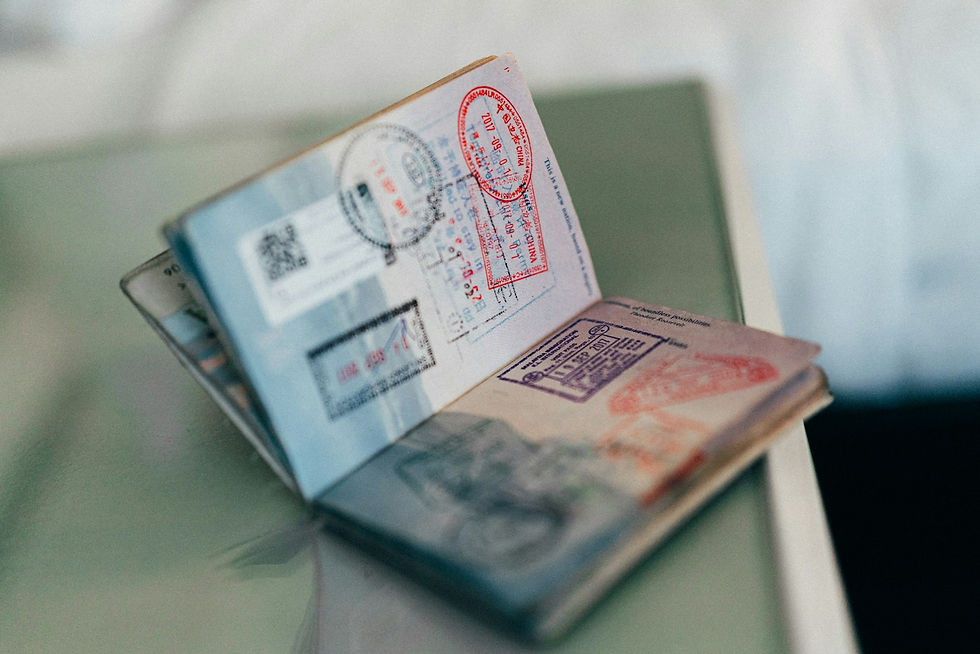
A short-term medical visa normally requires documents issued by a registered Korean institution. Photo: Kit / Unsplash
Language, food and the practical side of a two-week stay
English support at larger Seoul clinics is generally workable, and Hindi or other Indian-language interpreting is occasionally arranged through agencies rather than by the clinic itself. Establish before you travel who will interpret, whether they are clinically trained, and whether the same person will be present when you sign consent. Our guide to consent forms and treatment contracts explains what you are agreeing to.
On the practical side, vegetarian and Jain dietary needs are manageable in Seoul but require planning, particularly in the first post-operative week when you may not be able to travel far for food. Gangnam and Apgujeong have Indian restaurants and international grocery options, and ordering in is straightforward. Choose accommodation with a lift and a short walk to the clinic rather than a good location for sightseeing; our notes on recovery accommodation in Seoul cover what to look for.
Important No clinic can guarantee a surgical result, and any provider that offers a guarantee is making a claim no surgeon can support. This guide is general planning information, not medical advice, and it cannot replace an in-person assessment by a qualified specialist who has examined you. |
Aftercare once you are back in India
The follow-up schedule a Korean clinic would normally run becomes impossible once you are home, so agree the remote arrangement before surgery and in writing: who reviews your photographs, at what intervals, through which channel, in which language, and at what cost. Ask what happens if an Indian doctor needs to contact the operating surgeon, and whether the clinic will release records in English. Our guide to remote follow-up after returning home covers how this usually works in practice.
Leave Korea with the operation record, product names and lot numbers for anything implanted or injected, and your medication list. Rules on carrying prescription medication across borders are strict in both directions; our guide to taking prescription medication home from Korea sets out the documentation. Identify a doctor in India willing to do wound checks before you leave, and read the revision policy carefully, since a revision means a second visa and a second trip.
Frequently asked questions
Do Indian citizens need a visa to have cosmetic surgery in Korea?
Yes. Indian passport holders are not covered by Korea's visa-free or electronic travel authorisation arrangements, so a visa must be obtained before departure. Either a short-term general visit visa or a dedicated short-term medical visa may be appropriate. Confirm the current document list and processing time with the Korean embassy or consulate covering your state.
How long does the Korean medical visa take?
Processing times vary by mission, season and the completeness of your documents, and they change periodically, so no fixed figure is reliable. Start the application as early as your clinic can issue a treatment plan and appointment confirmation, and do not book non-refundable flights before the visa is issued.
Is cosmetic surgery in Korea cheaper than in India?
Often not. India has a large and competitive domestic market, and for several procedures Indian pricing is lower. Patients who travel are usually seeking a specific technique, a high-volume surgeon or a device-based treatment rather than a lower price. Compare what you are getting, not only the fee.
Can a family member travel with me?
Yes. Korea's medical treatment statuses include provision for an accompanying carer in appropriate cases, and for procedures involving general anaesthesia a companion is genuinely useful during the first week. Confirm the visa category for your companion separately, as it is not automatic.
What should I do if a complication appears after I return to India?
Contact the Korean clinic through the agreed remote channel immediately, and in parallel see a doctor in India for anything urgent. This is why the remote follow-up arrangement, the records release and the revision policy should all be settled in writing before surgery rather than negotiated during a complication.
Sources
Korea Health Industry Development Institute (KHIDI)
Korean Society of Plastic and Reconstructive Surgeons (KSPRS)
Korean Medical Association (KMA)
Korea Immigration Service, Ministry of Justice
Embassy of the Republic of Korea in India
PubMed, for peer-reviewed literature on post-operative air travel
Related reading
Medical travel from Kazakhstan to Korea: visa, flights, interpreters and payment
How long to stay in Korea for cosmetic surgery: a procedure-by-procedure day count
Medical tourism agencies vs booking a Korean clinic directly
Halal food, prayer and dietary needs for patients having surgery in Korea
How to book a Korean clinic appointment: from inquiry to confirmed surgery date
About this guide: Korean Plastic Surgery Info is an independent information service for international patients considering treatment in Korea. We do not operate, own or manage any clinic or hospital, and we do not take commission on bookings or referrals. Nothing here is medical advice or a recommendation of any provider; always obtain an in-person assessment from a qualified specialist before deciding on a procedure.


Comments