
Getting Around Seoul After Surgery: Airport Transfers, Taxis and Practical Mobility
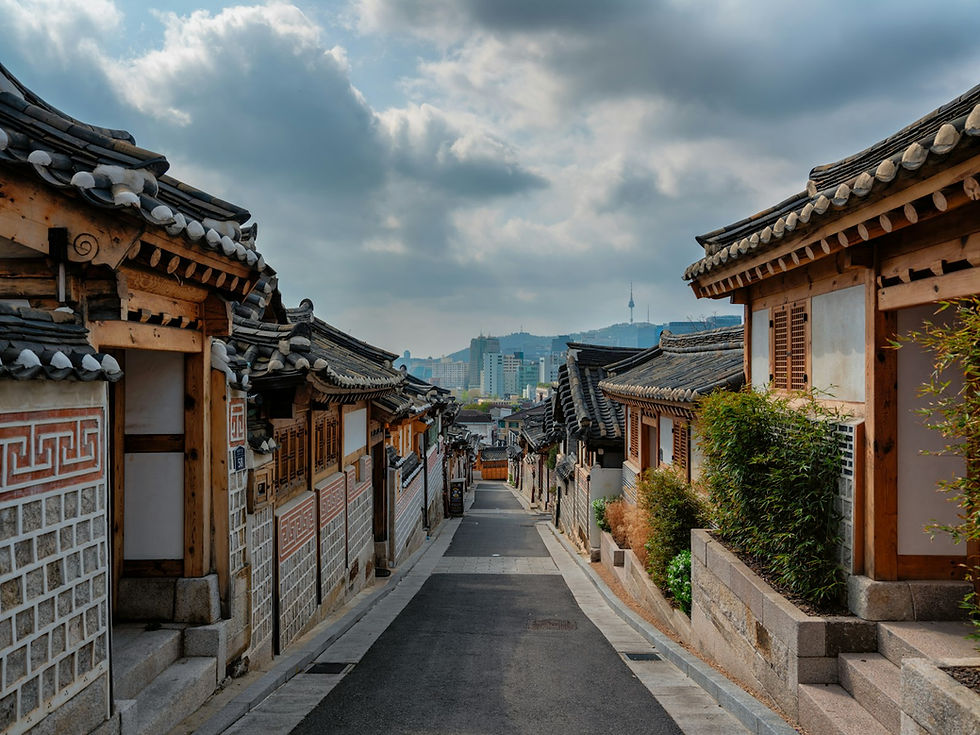
Seoul is unusually easy to move around in general, and unusually tiring to move around in during the first post-operative week. Photo: Elliot Gouy / Unsplash
Quick answer Plan a door-to-door private transfer or taxi for the days immediately after surgery, and treat the subway as a later-week option. From Incheon Airport, the airport railway reaches Seoul Station in roughly 45 minutes on the express service, while a road transfer to the Gangnam clinic district typically takes around an hour and can be considerably longer in traffic. Download a Korean taxi-hailing app and get a transport card on arrival, and ask your clinic whether it arranges transfers on surgery day.
In this guide
Why mobility planning matters after surgery
Seoul has one of the better urban transport systems in the world, which leads many patients to assume that getting around will not need planning. In normal circumstances that is true. In the first days after a surgical procedure it is not, because the constraints change: you may be swollen, bandaged, carrying drains, under instruction not to bend or lift, sensitive to heat, and tired in a way that makes a long transfer genuinely difficult.
The practical result is that the cheapest option is often the wrong one for the first few days and the right one later in the same trip. Patients who book accommodation close to the clinic and spend a little more on transport for the first forty-eight hours generally have an easier recovery than those who optimise for fare. Choice of recovery accommodation and its location does more to reduce travel burden than any transport decision.
Arriving: airport to accommodation
Most international patients arrive at Incheon International Airport, which sits west of the city; some regional flights use Gimpo, which is much closer. From Incheon the main options are the airport railway, airport limousine buses, taxis, and pre-booked private transfers. The airport railway reaches Seoul Station in approximately 45 minutes on the express service and rather longer on the all-stop service, after which you transfer to the subway or a taxi.
Airport buses are comfortable, handle luggage, and run to routes serving major hotels and districts, which suits an arrival day when you are not yet post-operative. Taxis and private transfers cost more but deliver you to the door, which matters most on the return journey from the clinic rather than on arrival. A road journey from Incheon to the Gangnam district commonly takes around an hour and can extend substantially during peak periods or bad weather.
If you are arriving with a companion, the calculus shifts toward the bus or train, since luggage and navigation are shared. Confirm with the clinic whether transfers are included; some clinics working with international patients arrange airport pick-up or surgery-day transport as part of their package, and the coordinator service is the right contact to ask.

The subway is excellent and cheap, but stairs, transfers and rush-hour crowding matter after surgery. Photo: KS KYUNG / Unsplash
Taxis and ride-hailing
Taxis are plentiful, metered, and inexpensive by the standards of comparable cities. Standard taxis are the default; deluxe taxis cost more and are generally roomier and quieter. There is also an international taxi service oriented toward foreign visitors with English-speaking drivers, which can be booked in advance and is useful for airport runs.
In practice most residents and many visitors hail by app rather than on the street, because the dominant Korean app lets you set a destination without speaking Korean, shows the fare basis, and records the trip. Payment by card or through the app is normal. Street-hailing works but creates the one situation worth avoiding: explaining an unfamiliar clinic address verbally through a language barrier while standing outside, swollen, in the rain.
Save your accommodation and clinic addresses in Korean in your phone before you need them. A screenshot works when connectivity does not. Keep some cash as a fallback, and see the notes on cards, cash and payment in Korea for how payment generally works.
The subway: when it helps and when it does not
The Seoul subway is extensive, signposted in English, and very cheap, and for the later part of a recovery trip it is often the best option. The qualifications are physical rather than navigational. Many stations involve long underground walks and multiple staircases, interchange stations can require substantial transfers, and rush-hour crowding is intense enough to make protecting a healing face or a drain site difficult.
Lifts exist at most stations but are not always on the route you would otherwise take, and finding them adds time. If you intend to use the subway in the first post-operative week, travel outside peak hours, plan the specific station exit in advance, and allow more time than the journey planner suggests.
A rechargeable transport card, available at airport and station convenience stores, works on the subway and buses and removes the need to buy tickets for each journey. It also works for taxi payment in many vehicles.
Comparing the options
The table below compares the realistic choices for a patient rather than for a tourist. Fares and journey times change and vary with traffic, so confirm current figures at the time of travel rather than relying on any published estimate.
Option | Best for | Comfort after surgery | Watch out for |
Pre-booked private transfer | Surgery day and first days home | Highest; door to door | Most expensive; book in advance |
Taxi hailed by app | Clinic visits, short trips | High; no stairs or crowds | Traffic at peak times |
International taxi service | Airport runs with language support | High | Advance booking usually needed |
Airport limousine bus | Arrival day with luggage | Moderate; comfortable but fixed stops | Final walk from the stop |
Airport railway | Arrival day, travelling light | Moderate; involves transfers | Stairs and interchange walking |
City subway | Later recovery week, off-peak | Lower in the first days | Crowding, long transfers, inclines |
Clinic districts and walking distances
Cosmetic clinics cluster heavily in the Gangnam area south of the river, around Gangnam, Sinsa, Apgujeong and the Apgujeong Rodeo area, with further concentrations elsewhere in the city. The practical implication is that clinics, recovery accommodation, pharmacies and convenience stores are often within a few streets of each other, which is a considerable advantage during recovery.
The terrain is not uniformly flat, and some blocks involve meaningful inclines. When assessing accommodation, measure the actual walking route to the clinic rather than the straight-line distance, and check whether the route is sheltered. In July and August heat and humidity are significant, and in winter pavements can be icy, both of which make a short taxi preferable to a ten-minute walk.
Practical constraints after specific procedures
After facial surgery, the common constraints are avoiding bending forward, keeping the head elevated, limiting heat exposure and minimising jostling. A taxi with a reclining seat is easier than a crowded train. Wearing a mask in public is socially unremarkable in Korea, which many patients find makes moving around considerably more comfortable while bruising is visible.
After body procedures, the constraints are different: compression garments, restrictions on lifting, and reduced walking tolerance. Avoid carrying luggage at all; use delivery services for bags where possible. After eye procedures, bright light and screen use may be uncomfortable, and reading subway signage is harder than expected.
Follow your surgeon's specific instructions over any general guidance, and raise mobility explicitly at the pre-operative consultation. Where language support is needed for that conversation, the notes on interpreters at Korean clinics set out what to expect.
Do not plan to drive yourself Sedation and general anaesthesia impair judgement and reaction time for longer than most people expect, and prescribed analgesics may add to this. Driving yourself after a procedure is unsafe and may breach the terms of any rental or insurance agreement. Arrange a transfer, a taxi or a companion instead. Follow your surgeon's specific instructions on activity, which take precedence over the general guidance in this article. |
Departure day
Allow more time than you would normally. Airport transfer from Gangnam should be planned around traffic rather than around the timetable, and the airport itself involves considerable walking, queuing and standing. Request assistance from the airline in advance if you expect to struggle; this is routine and does not require a medical certificate in most cases, though carrying your clinic documentation is sensible.
Keep medication, prescriptions and clinic letters in hand luggage, as covered in the guidance on taking prescription medication home, and confirm that your departure date is clinically appropriate rather than merely convenient, using the constraints set out in the guidance on when it is safe to fly.
Frequently asked questions
Should I take the airport train or a taxi from Incheon?
On arrival day, when you are not yet post-operative, the airport railway or an airport bus is usually comfortable and much cheaper; the express train reaches Seoul Station in roughly 45 minutes. For the journey after surgery, or if you are travelling alone with luggage and limited mobility, a taxi or pre-booked private transfer to the door is worth the additional cost.
Do I need Korean to use taxis?
Generally no. The dominant Korean hailing app lets you set a destination without speaking, and payment is usually by card or in-app. Save your accommodation and clinic addresses in Korean on your phone as a fallback, since a screenshot shown to a driver resolves almost any ambiguity. An international taxi service with English-speaking drivers is also available.
Is the subway usable after facial surgery?
It is usable but not ideal in the first days. Stations often involve long walks and stairs, and rush-hour crowding makes protecting a healing face difficult. If you do use it, travel off-peak, identify your exit in advance and allow extra time. Later in the recovery trip it is usually the easiest and cheapest way to move around.
How far in advance should I leave for the airport?
Allow more time than a journey planner suggests, because road conditions between Gangnam and Incheon vary considerably and the airport itself involves substantial walking and queuing. If you anticipate difficulty, request airline assistance in advance, which is routine. Carry your clinic documentation with you rather than in checked baggage.
Will my clinic arrange transport?
Some do, particularly those with established international patient services, and transfers are sometimes included on surgery day. It is not universal, so ask the coordinator explicitly and confirm in writing what is included rather than assuming. Where it is offered, it is usually the least stressful option for the journey home after the procedure.
Sources
Incheon International Airport Corporation
Seoul Metropolitan Government
Korea Tourism Organization
Korea Health Industry Development Institute (KHIDI)
Korean Society of Plastic and Reconstructive Surgeons (KSPRS)
Related reading
About this guide: Korean Plastic Surgery Info is an independent information resource for international patients considering treatment in Korea. We do not operate clinics or hospitals and we do not receive referral commissions. This article is general information, not medical advice, and does not replace consultation with a qualified clinician. Published by Korean Plastic Surgery Info.


Comments